
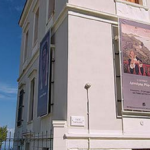
Housed in a three-storey neoclassical building in the centre of town, Kymi’s Folklore museum has been characterised as one of the best museums of its kind throughout Greece.
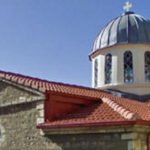
This church was constructed in 1605 in this historic village and functioned as the Greek Museum School (Hellinomousei Agrafon-Gouvas) as a university in old times, where many notables taught. The area had 24 churches then, and only three of these survive today, nonetheless attracting many pilgrims to the village.
Housed in a restored Venetian fortification, Halkida’s Folklore Museum offers visitors a chance to see what country and city life was like long ago.
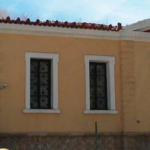
Halkida’s Archaeological Museum is one of Evia’s most extensive collections of island’s past. Featuring artefacts from the Neolithic Era down to the Late Roman Empire, visitors are offered a rare and in-depth look at Evia’s history down through the ages.
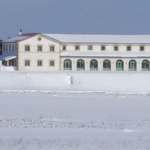
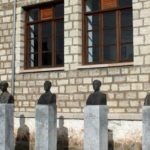
This is where the liberated government of Greece convened in 1944 at the end of WWII. The museum, as a result, houses much photography and texts related to the struggle and challenges during the war.
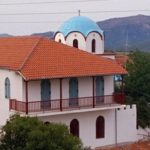
One of the two monasteries in operation (the other being Proussos), Tatarna has a very tumultuous history. It was originally built in the 11th century, destroyed 3 centuries later, then rebuilt in 1556. It was again destroyed in 1823 by the Ottomans as it harboured numerous rebels, to be built again under King Otto in the 1840s. Once again it was destroyed completely in 1963 because of a landslide and was rebuilt 500 meters away where it stands today. Despite all this, its valuable relics and holy objects where saved, including a library which holds 633 texts. Some of these were published in Venice, Vienna and elsewhere. The mosaic icon titled 'King of Glory', dating from 1350 AD, is also noteworthy. A library with over 600 texts forms part of this museum. Some of these texts were published in Vienna, Venice and other cities during the 16th century. A mosaic-laid icon called 'King of Glory' is also on display dating back to 1350 AD.
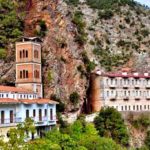
One of the few monasteries still standing in Evrytania, the Proussos monastery has frescoes dating back to 1785 as well as some from the 13th century, while the church itself is from the 9th century. The wood-carved iconostasis is from 1810. The monastery was built practically in the wild where weather conditions can get tough. There used to be a crypt which now functions as the church, with an allegedly miraculous icon from the Middle Byzantine period. Relics of saints are guarded here, and the decoration in general is remarkable. Old books and manuscripts are also among the relics. A sword from 1821is said to belong to Greek hero Karaiskakis. The monastery was also set on fire many times through the ages, the last time being by the Nazis in the Second World War, who probably discovered that it was a base for the resistance. The monastery has a museum that boasts religious and historical artefacts, including manuscripts and books from as far back as the 15th century. A sword that supposedly belonged to Greek hero Karaiskakis is also on display.
For over 130 years, the vines of the Kokkinos Pyrgos Estate have proudly continued the tradition of wine-making which dates back over two millennia throughout the Lilandia region.
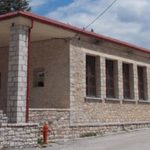
This village suffered a landslide in 1963, and the museum has captured this calamity in photographic material. The resistance during the war and the areas struggles a couple of decades before the landslide are also highlighted. Costumes, ceramics and ancient oddities complete the exhibit.