
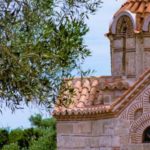
This small chapel is unique, inside and out. Architecturally notable is the fact that it’s a single space church, which is quite rare in Greece. It consists of an octagonal dome and an entrance gate dating back to the 14th century AD, though its foundations are believed to have first been built sometime during the 11th century AD. The interior wall frescoes are still visible despite their old age.
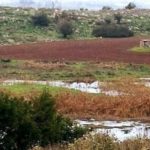
In the area of Messapia, traces of Neolithic settlements have been found, which contained a significant amount of pottery and other wares. Within the site there are also ruins dating back to the Mycenaean era.
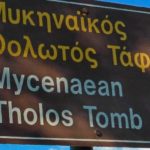
Within the small village of Katakalos just outside the town of Aliveri, stands the best-preserved Mycenaean tomb throughout all of Evia.

Throughout the last century, fascinating finds just outside the modern seaside town of Kymi have revealed sites of settlement dating back to 1900 BC. On the hill of Oksylithou, remnants of an entire town including buildings, roads, temples and squares have been unearthed. The variety of artefacts found within the area shows that the site must have served as an important trading centre for centuries.
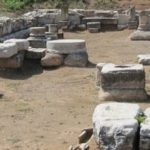
Aulis or “Avlida” as it’s known in Greek was where one of the most dramatic scenes throughout Homer’s Iliad took place. After killing a sacred deer of the Goddess Artemis, the leader of the Greek forces Agamemnon could not set sail for Troy due to a lack of wind.
Recently discovered in 1995, these Roman Baths lie just outside the town of Aliveri near the thermal power station at Karavos. The construction of the power plant is what revealed the site, which dates back to the 4th century AD and appeared to be used until sometime during the 7th century AD. The site contained the several different bathing areas, featuring cold, warm and hot baths as well as changing rooms and places where patrons could store their belongings. Though the site is well-preserved, some of it was unfortunately destroyed during the building of the power station.
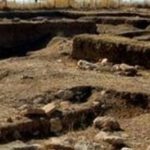
The archaeological site of Lefkanti at Xeropoli located between Halkida and Eretria has helped shed light on life during the so called “dark ages” of Greece. Excavations confirm that the site was an important Bronze Age settlement dating back to 2100 BC and continued to support a permanent population until as late as 825 BC. A number of tombs and artefacts dating towards the end of this period have proved invaluable in helping archaeologists learn more about this misunderstood period within Greek history.
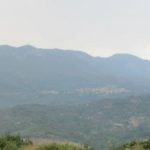
Ruins found on the hill of Kastri within the Potamias region reveal that the area was inhabited sporadically from the Neolithic era until the 6th century AD. Artefacts found at the site range from clay figurines to millstones and suggest that the area may have included a number of artisan workshops. Experts believe that it was later used as a lookout during the Byzantine period.
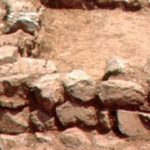
Prehistoric settlements and artefacts including a trove of pottery, weapons and tools have been found at this location about 15 klm East of Evia’s capital city, Halkida. Researchers date the site to have been inhabited from the early 3rd millennium BC and supported sporadic periods of habitation including an important Mycenaean colony where tombs containing skeletons were unearthed.
Within the site of Lefkanti, the Monument of “House of Toumba” is one of the largest structures which date back to the so called “Dark Ages” of Greece. The house itself appears to have been built around 1000 BC and included several graves built in shafts underneath the structure. The tombs contained human and horse skeletons, and the rich artefacts found included the earliest known piece of clothing in the form of an ankle-length robe.