
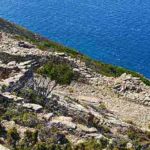
The old castle of Miliopou can be found standing at an altitude of approximately 300 metres on Mt. Gerakas. Today, visitors can view the ruins of the castle and settlements that were once there. Another notable site is the Early Christian church of Taxiarchis, also known as the “Evktirio of the Archangel”, which constitutes some of the oldest remains of a church on the island. It is believed to have been first erected around the end of the fourth century A.D., and today, remains of the sanctuary's arch, square altar, pillars and their respective capitals, can still be seen. A few metres away lie the old churches of St. Kyrikos and Ioulitas.
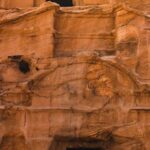
Found in an area called Klidi, the tomb was unearthed in 1954 and it contained 16 graves, with many important artefacts that were moved to the museum in Olympia. The tomb belongs to the legendary hero Iardanos (according to the description by Stravonas). Near the tomb there are the ruins of the altar dedicated to Samios Poseidon.
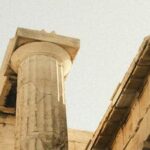
Here are some good examples of roman baths with subterranean waterworks and a ceramic furnace. There's also a large public building (use unkown) as well as foundations of homes dating from the Hellenistic and Roman years. A much older Mycenaean home was also exquivated on the plain of Agoulinitsa, while Mycenaean tombs were discovered at the mouth of the Alfeios river.
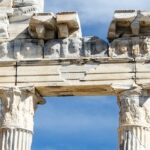
Another almost equally important ancient site in Greece is Bassae, where the Temple of Apollo Epicurus (Epikourios) lies. The temple is relatively well preserved but in danger of disintegrating due to the unstable ground underneath, which is why it is kept under a huge tent to protect it while under restoration. It was designed by Iktinos, the same architect who designed the Parthenon, and completed in 420 BC. The temple was dedicated to Apollo after he was considered to have saved the inhabitants of the area from an epidemic. Built at an altitude of 1131 meters, he temple is considered a great example of one that glorified the three styles of architecture during that era (Doric, Ionic, Corinthian).
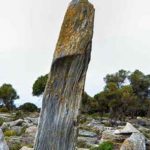
Ikaria's south east region is dotted with unexplained ancient artefacts which have yet to be studied extensively. They point to the existence of a civilisation which inhabited the island during prehistoric times. It's worth noting that important artefacts have been found around the acropolis of Drakanou, where ruins of ancient quarries, graves, dockyards and port structures can be seen. Just north of Drakano in the area known as “propezoulori”, there are large, single-stone columns, some still upright and most laying on the the ground. Made from slate or limestone, these columns do not surpass 2.5 metres. It has been suggested that they are the remains of an ancient, sacred area of the island.
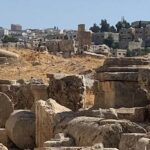
The city of Trifilia is 3.5 km south of Olympia, where excavations revealed a settlement from the mid-Hellenistic period. The Ilians destroyed the twon in 572 BC and the Spartans dominated it around 400 BC before surrendering it to Xenophon. The latter established the temple of Artemis who protected hunting.
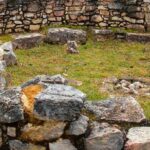
The ruins of the ancient town (Tipanai or Aipi), occupied the hill of mount Lapitha on the southern part of the village Platiana, near Olympia. It is situated inland, some 17km from the Kiparissian bay.
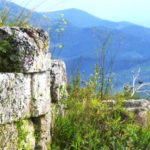
Built in a strategic position, Ancient Lepreo was a powerful city that strategically controlled all passages to Ilia, Messinia and Arcadia. This city would have frequent conflicts with the Ilians who were their main rivals.
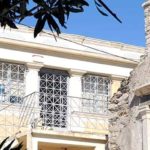
The archaeological site of Kambos consists of the ancient area of Oinoe, which was inhabited from the Mycenaen Age to the Roman and early Byzantine eras. The centre of the site consists of the theatre, Roman aqueducts, and an early Byzantine building, bearing the name “Palaces”. The theatre is an example of impressively-built architecture of late antiquity, featuring stone masonry and large, stone arches.
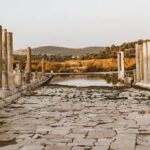
Ilida was the capital of the prefecture Ilia and organized the Olympic Games. There are some excavations and buildings from Greek and Roman times. These include a the theatre, gymnasium, Gallery of Corfu or double arcade and the Meridian Gallery with a triple aisle. Evidence of a square-shaped building with an interior courtyard can also be found.