
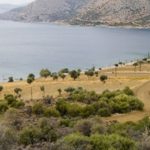
In the small village of Xironomi there are remains from the old settlement of Donakes, where stone foundations, construction and mosaics have been found. The latter has been safely transferred to the Museum of Thebes.
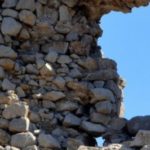
The prehistoric fortress of Distomo in Kastri dates back from Pelasgic times, i.e. 'pre-Greek' civilization. Ruins of a settlement and tombs from this era can be seen. Parts of the ancient wall of Amvrisos in the area can also be seen, as well as a royal tomb sculpted in the rock.
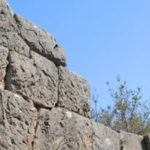
South of Davlia lie the ruins of the acropolis of ancient Davlia. Walls from the 4th century BC can be seen, with the base of these walls dating much further back to the Pelasgic era. Evidence of a tower belonging to the walls can be seen, as well as another tower built in medieval times is also on the site.
Not far from the village of Davlia, the four watermills stand witness to the prosperity of the area in history. Well preserved until now, the mills mechanisms and wheel are interesting to observe.
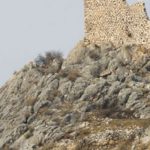
A defence tower dating back to the 4th century BC and part of more important fortifications are well preserved in Askri. The tower is said to be built by the people of Thespies to keep an eye on the Thebans, not long before the battle of Lefktra which took place in 371 BC.

Ancient Krefsis boasted once an acropolis against mount Korombili with venerable towers and walls. Parts of the complex remains, including a wall and parts of the towers from the 4th century BC. Much later another medieval tower was built, dating from the 14th century AD and was called Erimokastro or desert castle.
Ancient Thebes figures well in both Greek history and Greek mythology. Its past glory may not be reflected in the modern town of Thebes – or Thiva – today, but there is an excellent archaeological museum there are some sites to visit. These include the remains of the Temple of Ismenios Apollo, a few Mycenaean tombs, the spring of Agii Theodori (Fountain of Oedipus) and the Frankish aqueduct with the fountain of Dirki. Some 18 kilometres away from Thebes is the archaeological site of Plataiai. Other sites near Thiva include Lefktra, Gla and its Mycenaean Acropolis on Mount Ptoon, Tanagra which is known for its terra cotta figurines, and other sites such as Dilessi, Vathi of Avlida and Dliessi.
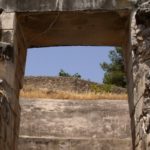
At Orhomenos there is a vaulted Mycenaean tomb dubbed as the Treasury of Minyas, as well as an ancient acropolis with remains of a theatre (Odeum), temple and other edifices. The monuments of Minyas, built during the 2nd millennium BC and discovered by Heinrich Schliemann in the 1880s, are quite impressive. The Odeum lies at the foot of mount Yfantio to the north of the arched tomb of Minyas, chiselled from the rock with 12 rows of seats. There are inscriptions of the music festivals around the site which was very popular with musicians and dramatists as far as Italy and Asia Minor some 2,500 years ago. It is still used for festivals today. The spring of the Three Graces (Treis Charites) also known as the Akidalia fountain, lies near the springs of the Melana river and is also worth seeing. There are also excavations in the area from Neolithic settlements, including square and circular foundations of houses, palaces, a sanctuary dedicated to Asclepius from Mycenaean times and tombs that are over 5,000 years old.
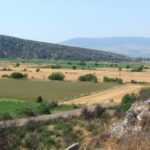
When western engineers were called to drain the Lake Kopais in the late 1800s to reclaim more fertile land, they were met with a mysterious set of huge canals and dykes, which showed that the lake had been drained before in the past. Therein lies the mystery of Gla...
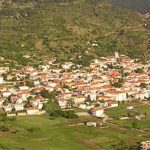
In place of Kyriaki there used to be an ancient city named Flygonio, which means gushing water. This city allowed control of routes connecting the mountain settlements with coastal roads of Elikonas. The Macedionian Philippos V reputedly destroyed the city around 350 BC although it managed to survive as recently as the 6th century AD when an earthquake wiped it off the map. Only traces of the acropolis of Flygonio remain, mostly walls and foundations of some buildings. Nonetheless, those who want to travel to the past or are fans of archaeology will find the site interesting.