
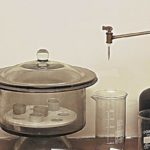
More a theme park than a museum, this is a great place to learn about bauxite mining and take an old wagon train into the bowels of the earth to understand how important this mineral was for the people and commercial viability of the area. A great visit for families with children.
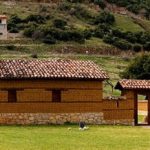
In the village of Gravia, the Gravia Inn has become a museum that shows how the Greeks succeeded in their revolution against Ottoman occupation. There are also graves of World War I soldiers in the town.
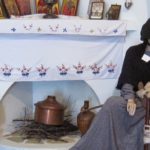
If you're in Efpalio, you can visit the folk art or popular art museum which reflects the works and handicrafts of the people of this area.

In the vicinity of the church of Agios Pneumatos there are remains of Cyclopean walls, mostly under and around the temple.
To the North of Malandrino there are remains of a fortress from Hellenistic times. Fortifications of Fyskeis in the area, representing an ancient city and a religious centre for Locris, are still in relatively good condition. Valuable artefacts from this era are in the museum of Delphi.
This is another ancient site that not much is known about, other than it was built on the outskirts of Efpalio.
The Echedameia and Medeon in Desfina area boasts ruins and circular graves that are present at Echedameia, which were destroyed by Phillip II of Macedonia around 350 BC. Another site in the same municipality called Syro-Kastro features remains of an ancient settlement called Medeon, also destroyed by Phillip II.
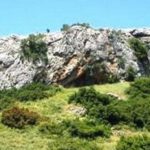
In Kastriotissa, very much inland behind the Mornos lake and the highest village in the region at 1,260 meters, there are ruins of an ancient castle which lie at the southwest end of the village, as well as large blocks of stone from the era of the Ophioneis Aetolians. The town is named after the castle.
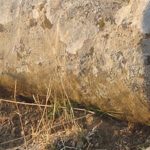
Lying to the northwest of the bay of Itea at a height of 380 meters, the ancient settlement of Tritea was home to the Ozolians and the Lokrians as recently as 30 BC. At that time it fell under the dominion of the Roman Governor of Achaia. Some ruins remain near the new village of Kolopetinitsa.
Chrisso, so called because an ancient town called Krisa stood once in its place back in the 14th or 15th centuries BC, displays remains of walls near Stefani hill at the southern side of the Chrisso. Also the hippodrome of Delphi for the Pythian games was in Chrisso long ago, but not much remains of it.