
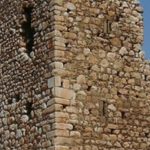
Near the dusty modern town of Aliartos lies an acropolis of mixed origins. The Mycenaean part lies on the hill, with more modern buildings from the 7th century BC to its north. Two towers from the 6th-5th centuries BC remain, with parts of a temple dedicated to the goddess Athena. Coins from around 500 BC were found here, as well as a cemetery dating from the Roman period.
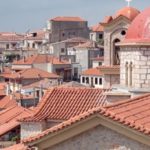
The Byzantine church of Agios Giorgios built with ancient materials offers great views. The church of the Assumption of Virgin Mary with its clock sits high on a large rock. The old temple was built in 1676 while the modern church was built in 1821, containing the relics of Agios Charalambos.
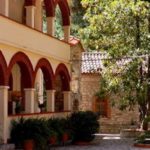
Some 12 kilometres away from Aliartos lies the monastery of Evaggelistria dating from the 12th or 13th century in a natural haven. The chapel of Agios Giorgios built in 1880 lies in the centre of what is now a women's monastery, complete with a textile workshop and a congress hall.
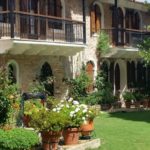
This historical monastery was founded in 1088 AC and may have existed before that. Two more recent temples were built on the site after fires and earthquake of 1870 destroyed the original. The Klephts (rebels) fought the Ottomans from this monastery, who eventually destroyed it in return as well.
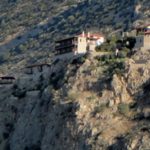
The Church of Panagia Kalamiotissa near a little port on the Gulf of Corinth was home to Osios Loukas for many years. The little church of Osios Nikitas on the south side of Mount Elikonas, dates back to the 12 century, housing the saint himself who lived and prayed all his life in the church.
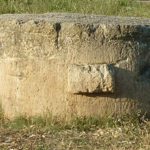
Near Itea on the seaside, there used to be an ancient settlement called Kirra, dating back to at least 3,000 BC. Although no one knows its exact origins, it is believed that merchants from Crete established the city. Kirra flourished after 1100 BC as a port city which was the gateway to Delphi. It was surrounded by walls and dotted with temples dedicated to Leto, Apollo and Artemis, including grand statues. The city's heydays probably ended in AD 740 with a massive earthquake that hit the area. Today, only parts of a medieval tower remain.
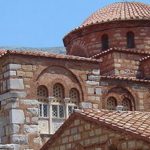
The historic venerable monastery of Osios Loukas (Hosios Lukas) at the slopes of mount Elikonas was founded in the early 10th century by the hermit Saint Loukas, whose relics are preserved in the monastery until today. Saint Loukas was actually a military saint who prophesized the re-conquest of Crete.
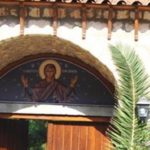
Mystery shrouds the origins of the Monastery of Lykouresi, with some saying it dates back to the 17th century and others saying as far back as the 15th century. There is a library, congress and an eco-farm connected to the monastery. On the road from Cheronia to the monastery are the churches of Agios Apostolos and Agia Paraskevi. Near the gully of the river Moros there is the church of Agios Charalambos. Agios Georgios in the mountain of Thourio is interesting and Agios Dimitrios near the Kifissos river. There is a church in the abandoned village of Karamousa. Lastly, the Temple of Metamorphosis tou Sotiros (Transfiguration) dates back to 1863, although the monolithic columns that support the dome of the temple date back to the Palaeo-Christian era.
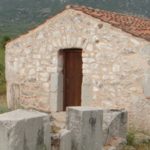
The church of Aghios Georgios Lakas in Kyriaki, built in the 12th century over another more ancient temple destroyed by an earthquake, is now represented with a more recent structure after the Ottomans destroyed it a couple of centuries back.
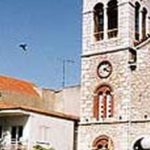
In the upper central square of Distomo, the temple of Agios Nikolaos took almost 30 years to be completed (1880 to 1908). It is said that Queen Olga donated the bell of the church's belfry. Note the sculptured icon screen which is a masterpiece in itself.