
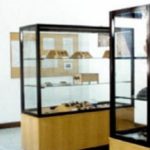
There's an archaeological museum tucked away in Lidoriki as well as notable archaeological sites in the area. At an altitude of 400 meters the area near the village of Kallio used to be known as Kallipolis, which was overrun by the Gaules in 278 BC. The city is now submerged under Lake Mornos which was created artificially, although many byzantine and ancient artefacts/ruins were retrieved, with many ending up in the Archaeological Museum of Lidoriki. At Lefkaditi some 700 meters above sea level, there are archaeological sites including a fortress and a settlement. The same applies for Koniakos at an altitude of 1,000 meters with remains of an ancient and medieval fortress.
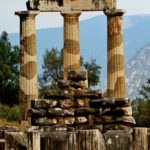
Arguably one of the most important spiritual focal points in antiquity worldwide, Delphi and its famed oracle are visited by thousands of tourists every month and it is well worth it. In summer it is best visited in the afternoon when there are less people and organized tours.
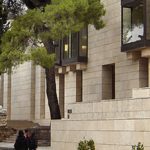
One of the most important museums in the country, displaying the history of Delphi and its powerful oracle. Stunning statues, architectural sculpture and gifts to the sanctuary are exhibited. They reflect the political, religious and artistic values of people around Ancient Greece and beyond from the 8th century BC until the late antique period. The greatest finds in this museum include the bronze charioteer from the 5th century BC, the gold and ivory heads of Artemis and Apollo, and the Roman copy of the Navel of the World (another name for Delphi).
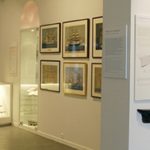
Two museums in one building, the Archaeological Collection of Galaxidi reflects life in antiquity including commerce, burial and more, with findings dating grom the Bronze age to the late antique period. In the same traditional building lies the Naval and Ethnological Museum which reflects the strong ties that this once flourishing maritime town has to the sea. Sea maps, model ships and paintings are on display here, as well as weapons from the war of independence.
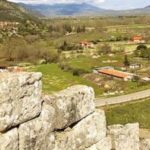
The modern village of Lilaia near Polidrossos is built on the ancient city by the same name, inhabited from the early Helladic period (2800-2100 BC). The fortification walls at the citadel summit indicate traces of a constructional phase before the city was destroyed by Phillip II. Another part of the fortress dates back to the rebuilding phase after the reign of Phillip II. In 200 BC the city was under siege by King Phillip V but it revolted and gained its liberty. The city was also mentioned often in the accounts of Strabo, Ptolemy, Pliny and Pausanias, who noted an agora, theatre, baths, sanctuary to Apollo and one to Artemis. Both temples featured marble statues of the gods in standing posture, made by Athenian sculptors. Lilaia was constantly inhabited until the Byzantine era but soon thereafter fell into decay and was abandoned. Today, walls from antiquity and remains of a castle that are still visible.
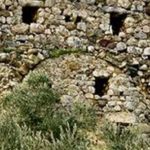
The polygon shaped walls of Koronia stand witness to a once important fortress dating back to classical times, known as Tilfousion and situated atop Paliothiva or old Thiva. A medieval tower remains on the north side of the hill.
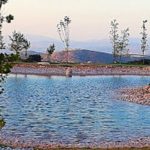
A theatre from the 3rd century BC has been found here, including an altar for the muses and a gallery for votive offerings made to them. Only a few ruins remain from the grand past of this area, although some of the pedestals belonging to the statues of the muses were transferred to the museum of Thiva.
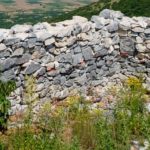
Ancient Thisvi has ruins in Kakosia, which was inhabited as far back as 2000 BC. There are remains from the Mycenaean era such as a vaulted tomb as well as some parts of the acropolis, found on Paleokastro (Old Castle) hill.
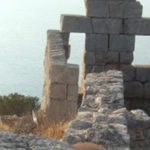
The coastal archaeological site of Sifes lies on the eastern side of the bay of Domvrena near the village of Alyki. A fortified wall in decent condition from the 4th century BC has been preserved, plus parts of 6 towers and 3 gates, with the main one next to the beach. Ceramics from various eras have been found too.
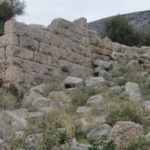
Near Prodromos on the way to Saranti there are ruins of an ancient settlement called Korsies from the 6th century BC. The ruins there hail from archaic, classical and Hellenistic years, most notably a temple dedicated to Hera, as well as evidence of ancient spinning wheels.