
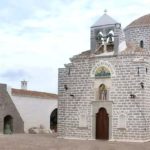
Honoring the prophet Elijah, this church sits at an elevated, picturesque site just below the island’s highest point of Mt. Eros (588 m.) Visitors pass through a beautiful pine forest before arriving and enjoying panoramic views over the island and the entire Argo-saronic Gulf. It was built in 1831 and operated as a prison during the years of the Greek revolution for resistance leaders such as Theodoros Kolokotronis and many others. Today the monastery contains a rich library which was originally compiled in 1870 by the head priest at that time, Ierotheo Kostopoulos.
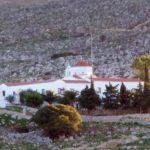
The monastery of St. Nicolas can be found in the area of Limnioniza and was built sometime between 1675 and 1724. It features a Byzantine design with an octagonal bell tower and enjoyed a period of great influence following the Greek revolution of 1821. By the 1940s however, the monastery had fallen into disrepair and was eventually abandoned after the last priest, blessed Aresenios Vetimis, passed away. Renovation began under the auspices of the Greek Orthodox Church in 1983, when it was converted into a woman’s convent, and today it has been completely refurbished.
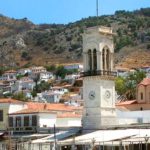
This large church is located in the center of Hydra’s main port. It includes a three-level bell tower constructed completely out of marble from the island of Tinos, and which can be seen from every point in town. It was designed by Venetian and Genovese architects in 1643, when it first began to operate as a women’s monastery. Today, only the main sanctuary is still in use, with some of the former nun’s cells having been converted into civil offices, while others have become part of a small ecclesiastical museum.
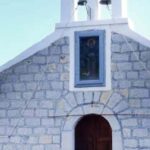
A worthwhile site for anyone exploring Hydra, it can be reached by foot or on donkey. This women’s convent lies a short distance from that of Profitis Ilias, at an altitude of 500 m. It’s surrounded by pine and cypress trees and enjoys impressive views. The quaint sanctuary lies in a simple building, and is part of the greater complex dating back to 1865.

Hydra is home to several types of migratory as well as permanent bird species, including thrushes, turtle doves, quails and partridges. Several small mammals including wild hares and rabbits, the unique wild goat of Hydra and a large variety of amphibians and reptiles complete Hydra’s rich ecosystem.
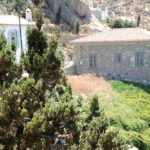
A remarkable number of wildflowers grow on Hydra, including several rare species. Common varieties to the island include daffodils, cyclamens, and poppies which dot the countryside along with cypress and pine trees, thyme and other bushes, as well as century-old olive trees.
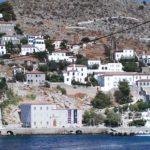
The remnants of several castles and fortifications can be seen while exploring the island of Hydra. Some of these include the small castle aptly named “Kastraki” which dates back from the 17th century and stands along the island’s coastline.
Located in a restored 18th century building, this museum contains a number of objects which chronicle Aegina's modern history. The building has a replications of what a typical Aeginetan home may have looked like 200 years ago and includes representations of the lives of fishermen and common villagers.
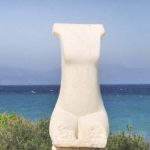
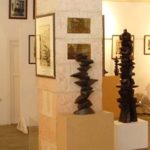
This fascinating collection of art is located 3 kilometers northwest of Aegina Town. It's named after the famous Greek sculptor whose works include pieces made from stone and wood, some of which were inspired by Greek resistance attempts against the Turks and later the Germans. Before his death in 1993, he founded the Christos and Souli Kapralos on Aegina.
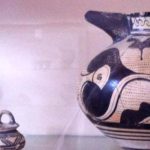
Greece's first Archaeological museum was built by Ioannis Kapodistriou in 1828. The current building was built in 1980 and is located near the archaeological site of Kolona. Several items dating back from the neolithic period are on display and were excavated from the site of Kolona, the Temple of Ellanio Zeus and the Temples of Artemis and Apollo.