
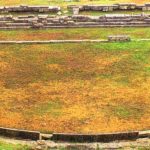
Having gathered settlers from all over Arkadia, Megalopolis offered temples to many gods such as Zeus, Asclepius, the Mother of the Gods and more. Its ruins include the Stoa of Philippos, Sanctuary of Zeus Soter, Stoa of Myropolis and a Bouleterion. There was also an ancient theatre which seats for than 20,000 people and considered the largest in Greece. Its good acoustics have made it a place for drama revivals in recent times.
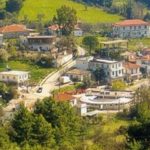
Loutra Iraeas near the Ladonas bridge has sulphur springs which may have been popular in antiquity. Very good mosaics are present in what used to an ancient bathhouse, in an area known also as Liadora. The ruins of Ancient Iraea (built by Iraeus, son of Lycaon) are found south of here, near Ayios Ioannis on the banks of the Alfeos river. The city, which had two temples dedicated to Dionysus and an edifice for orgies, was also home of the famous athlete Damaretos (who was victorious in the armed race at the Olympics).
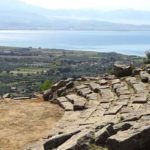
Close to Paliokastro Mamakou near modern-day Makyneia, there are remains of a small theatre lying at the food of a fortified hill, considered part of Aitolian Makyneia. The theatre is of unusual shape, with originally 14 rows of seats and an adjacent linear wing of 3 rows. It dates back to the late fourth century BC. The ancient theaters of Makyneia, Plevronas, Oiniades and Stratou are still found at the same location where the great namesake cities flourished.
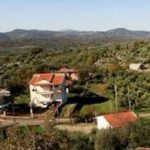
Remains of the impressive walls of ancient Palaiomanina – stretching some 1,650 meters in length – date from the 4th century, and are partitioned into sections. Squared and trapezoidal rocks characterize this wall, complete with a 2-meter wide gate called Avloporta, an arch and horizontal beams. Beyond the walls there are tombs, cyclopean walls, evidence of homes from the copper age, remains from Mycenaean times, vaulted tombs, water cisterns, geometric burial jar, box-shaped graves from the classical years and much more.
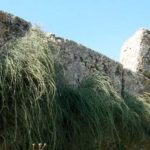
Not far from the village of Chysovitsa are remains from the ancient town of Koronta, including Mycenaean graves, Cyclopean walls a reservoir and evidence of a castle. There was a Doric-style temple built in honour of an unidentified female godess, as well as remains of different buildings. Although the site was robbed many times, several artefacts were found and are now in the museum of Agrinio. They include golden wreaths, copper knives, a golden pig and many other objects.
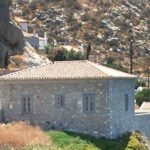
The traditional architecture of Hydra is impressive and unique, with several mansions that particularly stand out. Two have been turned into museums, specifically the Manor of Lazaros Kountouriotis and Pavlos Kountouriotis.
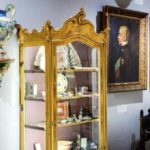
This museum houses objects from the Balkan, First and Second World Wars. A gallery featuring oil and water paintings of war ships done by well-known artists can be found on the first floor.
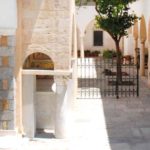
Housed within the old cells of the Monastery of the Dormition of the Virgin Mary, it contains a collection featuring objects found in religious ceremonies and traditions. Most impressive is an icon of the Virgin Mary “Rodo Amarando” dating back to 1774.
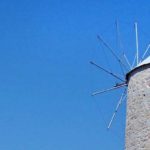
As the first element of Hydra to greet incoming visitors from the sea, the island’s scattered windmills can be found in a variety of conditions, ranging from near perfect preservation to crumbling ruins.
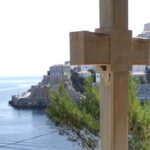
Within a pine forest located just below the historical mansion belonging to the same family, lies the tomb of grandson, Pavlos Koundouriotis. Served as leader of the Greek fleet during the Balkan Wars (1924-1926) as well as President of the then Hellenic Democracy (1926-1929).