
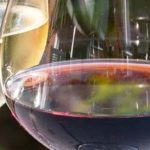
While Skyros doesn't seem to have any vineyards per say, the country supermarket on the main square makes and bottles its own wine. This isn't an island for wine tours, but if you're there drop by the place and investigate this interesting story, then buy a bottle or two of inexpensive wine to enjoy.
This generally inaccessible cave is located at 3.9 km southwest of the town of Farsala in the Alogopati position, on the slopes of Karapla, above the southernmost tip of the Enipea valley. It takes around half an hour of very demanding climbing up a very steep cliff to reach the cave, which is why it is very rarely visited. For some, it’s worth it however as once there, one can see the ancient shrine dedicated to the worship of Pan and the Nymphs.
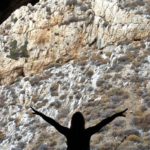
There are many unexplored caves on Anafi. The best known is Drakontospilo with a variety of colourful stalagmites and stalactites.
Archaeological and geological studies have been carried out in around 10 caves and rock shelters around Lake Karla, including at the famous Aghios Athanasios cave, which is relatively small but highly impressive because of its beautiful rock formations.
Below the southeast cliffs of Skyros the sea caves form a major attraction for visitors. In the caves the colours in the water are spellbinding, thanks to the special effects of the sun's rays.
Six hundred and twenty geological monuments have been recorded in Magnesia, many of which require further research and protection, including 280 caves in Pelion, Orthi, Mavrovouni, Halkodonio, Hlomo and Tisaio.
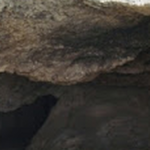
The island of Gioura (or Gerontia in ancient times) is home to the Cyclops cave, adorned with multicoloured stalagmites and stalactites. This is the largest cave in the Sporades islands and leads to an area that is 40x50 wide, with a height of 15 meters. Finds from the cave include objects not only from the Classical and Roman eras, but from the Mesolithic and Neolithic periods as well. This has shed light on the fishing and hunting habits of the period. Gioura is also home to a rare, protected species of wild goat known as Apra hircus aegagrus.
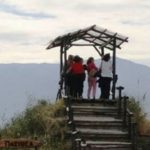
There used to be an environmental wetland at the point of the Papapouli river in Pieria’s Nea Pori called Tethys Park. The wetland was created from the flow of the Papapouli river and the effect of the tides of the sea, forming a network of water pockets in land area, becoming home to numerous species of fish, fauna, birds and reptiles. The ongoing combination of fresh and salt water, together with the region’s environmental conditions, have made the wetland into a food rich ecosystem.
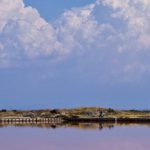
This remarkable 15,000 acre large lagoon is home to numerous species, including the Pink Flamingo and a large population of Mediterranean turtles, chiefly owing to the food it produces for them. Five kilometers east of Kitrous beach there’s a alinas Beach is a salt production facility that produces up to 40,000 tons per year from March to October. In the area near the salt marsh is a wetland of international importance with rare birds. In the lagoon one can find the sea lily plant (Pancratium maritimum), a specially adapted species, and until 1989 the area was the nestng ground of the Mediterranean Gull (Larus melanocephalus), whose numbers have now significantly dropped. Alyki Kitrous is part of the European ecological Natura 2000 network.
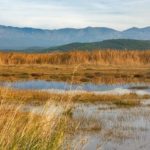
The Delta of Aliakmonas covers an area of 40,000 stremmata. A great variety of animas live within the dense vegetation surrounding its banks, such as foxes, jackals, badgers, weasels, hares, wild cat and the European ground squirrel.