
Head to the Kyklopas (Cyclops) Cave near the monastery of Evaggelistria, full of stalagmites and stalactites. Discovered in 1893, the cave boasted a collection of ancient artefacts such as utensils and vessels, suggesting that it was a place of ritual or worship in antiquity. There's even an altar with evidence of fire and bones, now all covered by material from the stalagmites. The inner chamber features a small lake.
Translated as Bear Hole, this cave will enthrall all spelunkers. Stalactites adorn the cave’s main chamber which makes it a must-see. Hike to Koziakas Lake nearby.
The largest cave on Sikinos is Mavri Spilia or Black Cave. It is unique in the colours of the rocks, humidity and sea water. Also worth visiting are the Drakontospilies and the Drakofrydo cave.
Avid spelunkers will enjoy Trikala’s many and varied caves. A large number of them are archaeologically significant, while your treks to find them will lead you through stunning forests.

In Alithini (1 km from Ano Syros) and further north to Plati Vouni (5 km) we find the cave where according to tradition, the philosopher lived on the 6th century B.C.
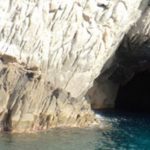
The cave of Aggeloudokamara (roughly translates to Angels' Room) is said to be home to fairies and trolls, particularly according to the older generation in the area. The effect may or may not be due to the cracks and crevices between the stone blocks and structure of the cave which allow light to pass through, resulting in a magical atmosphere.

A large vertical cave located 2 km. from the village of Kanalia, at an altitude of 440 meters. It has a total depth of around 43 meters and is considered one of the most beautiful vertical caves of Pelion.
Between the Aghios Nikolaos of Flabourio and the sandy coast of Limnionas, at the edge of Veneto-Old Mitzela, small and large caves are found within the coastal rocks.
Some of these, known by the ancient Greeks as 'Ipnoi', have stalactites where wild pigeons and seals nestle. This maritime spot was written about by Herodotus, who described the destruction of Xerxes' largest fleet there in 480 B.C. The Despot’s Cave, named thus because it was regularly visited by Archbishop Dimitriados Grigorios in 1905, is the most well-known amongst them and is large enough for a fishing boat to enter through.

Arguably one of the largest caves in Greece, Chrysospilia (Golden Cave) remains pretty much unexplored. It lies only 10 meters above the sea on the north-east part of the island, full of stalagmites and stalactites. The cave is also exceptional from an archaeological point of view, as human skeletons from Roman times as well as broken vessels have been found there. Also a number of youth in ancient times engraved their names on the walls and roof, establishing the cave as a probable religious site where ceremonies of manhood took place around the 4th century BC.
Archaeologists have discovered evidence that the cave, located in the area of Aghios Athanasios, was used during the Mycenaean and Neolithic times. It is considered one of the most historically important caves of Karla and Magnesia in general because of the finds discovered there, and also due to its size.