
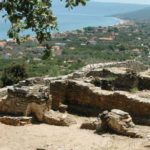
Once a fortification lying over 21,000 meters just north of Velika, this castle was strategic in surveying coastal settlements. Its walls are two meters thick and at some points three meters high. Source: Dimosagias
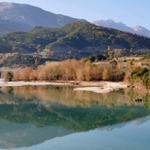
This is the third longest river in Greece, emanating from the Pindos Mountains and running through gorgeous landscape as it reaches Argithea. It also forms the little lake of Stephaniada which took it shape thanks to landslides in the area. The lake is 130 meters deep at certain points.
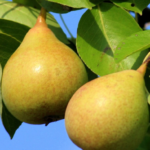
In the municipality of Tamassi, the village of Ahladia, which means 'pear trees', lies 3 km from Leontari. The forests around the village are so dense that it's difficult to wander through. About 2200 acres of mountain landscape are covered with forest, including the forest of Koumaros, forest of Zervos, and forest of Tourpes near Agios Giorgos. The trees are evergreens, oak and broad-leafed varieties (shrub oak, planes).
Also in Tamassi is the village of Anavra. The highest summit in the village, at 984 meters, is Katachloro and looks out to the dam of Smokovo. There's also a cave on its southwest side. Katachloro is a wildlife reserve. Oak forests abound in the area of Anavra, including the old forest of Likorema where wolves abound.
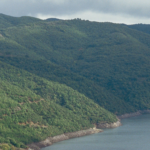
A lovely area filled with water, the Onochonos river rushes from its source in Xerovouni down to the gorge of Loutropigi, then on to Kedros, Sofades and the Pineas. The river contains native fish species called ladouses, as well as freshwater mullet. In the region of Redina where the Onochonos also passes through, there are some 7500 acres of forested land, mostly fir and chestnut forests, with various species of wildlife as well.
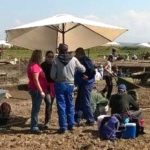
Skotousa stood over hills on the road between the villages of Ano Skotousa and Agia Triada. While not totally unearthed, current remains point out to long walls over 4 km with 44 square towers, 5 gates, a stadium and a theatre. Source:Farsala.gr
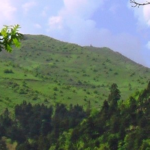
The Aidonochori area is crossed by a tributary of the Onochonos river which emanates near Angelina. Numerous walnut trees grow in the area, which is full of vegetation and wildlife, particularly next to the river. A forest road will take you to a lovely area called Tsapournia, 7 km from the village. There is a summit there at a height of 1650 meters that affords a view of the entire Thessalian plain. The 4000 acres of forest – mostly fir – harbour hares, bears and wolves.

Kedros – meaning cedar – is a village at an altitude of 567 metres with the peak of Katachloros at 984 metres being a two-hour hike from the village. The area is full of forests with deciduous trees, oaks and cedars. The nearby peak of Kolokria at 635 meters boasts cedars and wild roses, and is just half an hour from the village. The area's river is full of local types of fish such as Sirtia, Ladouses, Kefalia and Platitses.
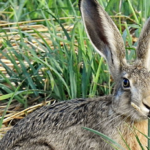
Loutro is an old village of Menelaides region located twenty kilometres from Karditsa at an altitude of 247 metres. The natural area of the village is lovely. The woods of Agios Giorgos extends over 500 acres with dense oak forests. Foxes, hares and wolves thrive in the woods.
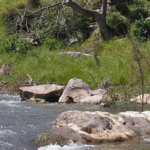
Dafnospilia is a village within the Kallifoni region. It is 17 kilometres from Karditsa at an altitude of 570 metres. The Kalentzis River flows near Dafnospilia. It has a length of 40 kilometres from a source near Apidia and Amarantos and is a tributary of the Pineus. In its waters are fresh water mullet, briana fish and ladouses. Near Dafnospilia there are three springs: the fresh water spring of Mana, the mineral springs of Kaloyianni, and the spring of Vavara. The thickly vegetated peak of Prioni has an elevation of 700 metres and is accessible by car about half the distance to the peak. On the peak of Kazarma there is an observation point at about 600 metres altitude. It is three kilometres west of the village and accessible by a dirt road. The smaller peak of Drakovouni east of the village is also accessible by unpaved road. Among the natural attractions of the village area is a large cave within limestone.
Northeast of the low hill of Kastraki you will find the base of an ancient theatre, and a flat area where one can assume the theatre orchestra once stood.