
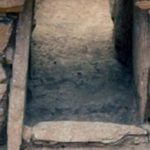
The well-preserved vaulted tombs discovered here belong to a cemetery of the pre-geometric-geometric era (8th-10th Centuries BC). It is an extension of the cemetery created for the ancient city of Feres, which developed beside the ancient Feres - Larissa road.
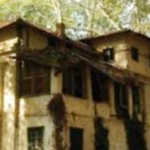
Lazarina in the Mouzaki district has the mansion of landowner Christos Zografos, built in 1986, representing the industrial heritage and economy of the area then. This included Greece's first sugar refinery and rice mill, parts of which can still be seen. There are efforts to incorporate these into an industrial museum.
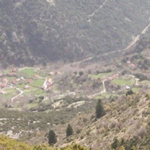
Therino is a traditional village 10 km northwest of Argithea, At an altitude of 870 metres. An old watermill dating from about 1870 still stands at a site called Goura.

Two ancient mounds (magoula) have been found east and south of Armenio. The largest, known as Trani, has an impressive height of 10 meters, a length of 500 meters and a width of 300 meters. Finds here hail from Neolithic, bronze, Classical and Byzantine periods. Source:Karachristos B. G.
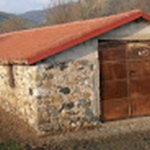
Kedros is a village at an altitude of 567 metres as we leave the Plain of Thessaly for the Agrafa Mountains. The centuries-old watermill, which is still in use today, is among the more notable landmarks of the village.
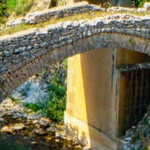
Drossato in the Athamanon area has a stonebuilt watermill about 150 years old. Village houses are stone built, dated 150-200 years. Stone shepherds' cottages can be seen in the Monoplati area. A wonderful stone arched bridge between Drossato and Tirologos from the Ottoman era is declared a national monument.
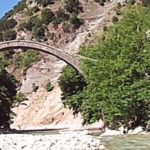
In the community of Karya, there's a stone bridge that was built in the 13th century joining the villages of eastern Argithea with the western part. This is the longest single-arched bridge in Thessaly!
Written also as Rentina and pronounced Redina, this traditional village has impressive stone-built fountains and noteworthy architecture. Ten kilometres from the village at the site of Dipotamos is the stone bridge of Kalogeropoulou.
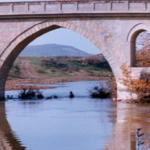
Constructed sometime between the 12th and 15th century, this is one of the oldest in the region and links together the banks of the Sofaditis river. It is a three-arched bridge with, interestingly, Persian influence.
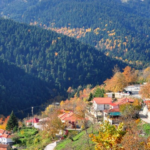
The village of Filakti sits at the end of a long but beautiful country road 32 km from Karditsa. It lies on the steep slopes of the Voutsikaki Mountains at 1200 metres facing south. The village has many stone fountains such as those of Papadeiki, Xerovrisi and in the forest at the Ennea Nera (Fountain of 9 Waters).