
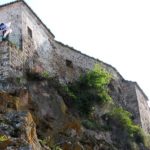
This stunning church is one of the most popular on the island. To get there, you’ll need to climb stone-carved steps to reach the church which was built on a very high rock. Admire the views and the beautiful icons and wood carvings in the interior of the church.
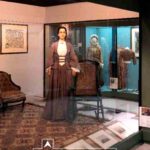
This Institution has focused on the research, study and preservation of Peloponnesian culture – as well as Greek culture overall. Research results and scientific conclusions relating to culture are revealed at the institution.
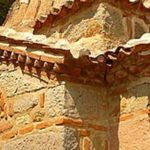
If you love religious archaeology, this is the perfect site for you. Built in the 5thC, the remains of this ancient church will take you back in time. Admire the ancient masonry and notice the floor plan of the church.
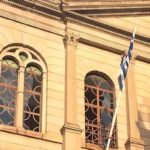
This majestic cathedral was built in the 16thC and hides a number of gems for you to admire. The underground tomb is a must-see as are the relics that belong to St. Theodorou of Byzantiou. Killed by the Ottoman soldiers, he’s the patron saint of Lesvos. Admire the many icons that date to the Byzantium.
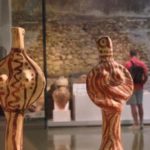
Erected in 1713 by the Venetian Provider Sagredos, the museum features Mesolithic and Palaeolithic finds from as far back as 8000 BC. Some of these hail from the caves of Kefalari and Frachti and Kefalari, in addition to early Helladic finds from Asini, Tiryns and Berbati (2nd millennium BC.). There are also Mycenaean or late Helladic finds from different areas of the Peloponnese as well as from the Geometric era. Archaic and Roman finds are also in the museum, making it a very diverse one that is worth visiting.
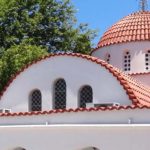
One of the most important on the island. You’ll love the monastery’s one-of-a-kind two-story church with its Byzantine icons and elaborate altar. The relics of St. Nicholas, St. Irene and of course St. Raphael are kept here. Explore the monastic cells and make it a point to go to the Church of St. Mary Magdalene. The murals there are works of art.
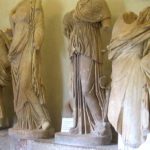
While some of the sculptures originally here were moved to the National Archaeological Museum in Athens and replaced by plaster versions, there's still a lot to see. The museum houses healing inscriptions, hymns and votive sculptures, as well as several architectural parts of monuments from the sanctuary of Asclepius.
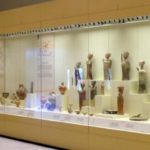
In the site of Mycenae itself, the museum unveils the life of the Mycenaeans and their burial customs. Curious findings from the graves are exhibited as well as objects from historical years and the Mycenaean civilization in general.
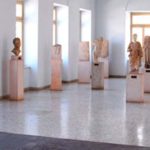
Discover collections from classical and prehistoric times from the area and beyond, dating from 2000 BC to 600 AD. Interesting finds from the Mycenaean and Neolithic periods (from 5000 to 1100 BC) are also on display, thanks to the efforts of the French Archaeological School and the American School of Classical Studies at Lerna.
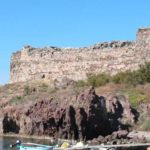
This 18thC Ottoman fortress overlooks the area and played an important military role during Ottoman occupation. Explore the layout of the castle and get the same vantage point as warriors once did, with stunning views of the harbor and Sigri. Make sure you visit the Petrified Forest and Museum near Sigri.