
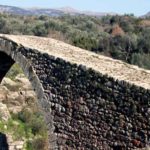
This stunning stone bridge is a gem. Built by the Genoese Gattelusi family in the 1300s, you’ll love its medieval architecture. It’s perfectly preserved so admire the stone masonry and design. While you’re there, hike through the surrounding area. You’ll be astounded by the many medieval ruins.
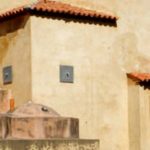
Admire these Turkish baths which portray the varied influences on Lesvos’ history and architecture. The bath is perfectly preserved and reflects Ottoman culture in Lesvos. The Harsi Hamam is now used as a cultural center, so take advantage of the many events that take place in this stunning building.

Long before the ancient Greek philosophers and the battles of Athens and Sparta ever took place, more than a thousand years before these events, there was another powerful and intriguing civilization of Greece belonging to the Mycenaeans.
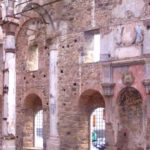
This mosque is a gem, and you’ll be able to admire the area’s Ottoman influences in its wonderful detailing. It was built in 1825, and is perfectly preserved. As you make your way to the mosque, explore the surrounding neighborhood. It was one of the Turkish areas on the island during Ottoman rule.
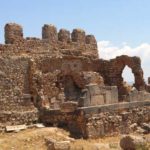
Not to be confused with the city by the same name, and lying at an elevation of almost 290 metres, Larissa represents the Acropolis of Argos. Not to be confused with the city by the same name, and lying at an elevation of almost 290 metres, Larissa represents the Acropolis of Argos, possibly named after the ancient Pelasgos’ daughter. Protecting the entrance to the plain of Argolis, this natural fort was not surprisingly used by the Romans, Byzantines, Franks, Venetians and Ottomans. There are four cisterns and a wall from more recent years around the acropolis, which used to be surrounded by older Cyclopean walls. This is where history and mythology start blending. An underground passage some 3,000 steps in length lies under Larissa, with two caves. The church of Agia Marina from 1859 AD was constructed on the remnants of the temple of Zeus of Larissa. Another church on the slopes of Larissa, that of Panagia Katakekrymmeni, is built near where the ancient temples of Athena Oxyderkis and Pythaeus Apollo are. The ancient sanctuary of Acraia Hera is also visible at Larissa, so the temple of Apollo, considered the first to be first built by Pythaeus of Delphi.
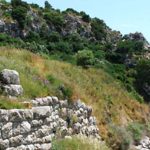
Near the picturesque seaside village of Asini lies the archaeological site by the same name. It features many Mycenaean tombs (the Barbouna necropolis) among others. The tombs are also known as the Barbouna necropolis. The remains of settlements date from pre-Mycenaean, Mycenaean, Geometric, Archaic and Hellenistic times. The citadel or acropolis and walls with a large tower belong to the Hellenistic period, i.e. from the third century BC. It was rebuilt during the Byzantine era.
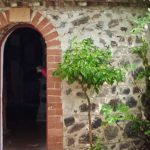
This one-of-a-kind monastery is one of the most famous. Founded in 1523, it’s a miniature replica of the monastery of Agion Oros in Mount Athos. Explore the museum within the monastery, admire rare manuscripts, many stunning icons that date back to the Byzantium, embroidered fabrics and other religious items.
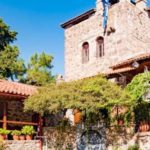
This beautiful monastery is one of the most important sites on this island known for its vibrant religious culture. Taxiarhes is the area’s patron saint, and the monastery houses a unique sculpture of St. Michael which is known for its miracles.
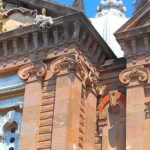
This stunning church was designed by a famous architect and was built on the site of the Ancient Asklypeion. It’s one of the grandest and most popular churches on the island, so admire the icons and intricate woodcarvings on the altar.
Discover costumes and other articles related to silk, which is connected to the commercial wellbeing of the town in history, in addition to many other folklore items.