
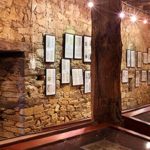
Zagora is known for its silk and textiles, which merchants sent out on 'Zagoras ships' across the Mediterranean and Black Sea. The village has great mansions and the Hellinomouseion building founded in 1702, an old school of language, science, philosophy, etc. Noteworthy too is the Public Library of Zagora.
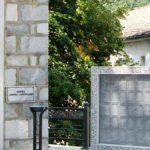
Drakeia boasted a school in 1760, and before that residents dealt with sericulture, farming and woodcarving. The slated central square of the village is the oldest in Pelio and hosts the monument in memory of the 114 people from Drakeia that were executed by the Nazi occupation army.
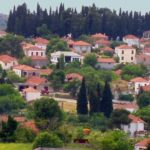
This village boasts haunting neoclassical mansions, as well as the church of the apostles Peter and Paul. It has a great marble belfry, two Russian bells and a Swiss clock, similar to another in Smyrna. The region's bridges are also impressive, in the past accessed by stone paths (Kalderimia).
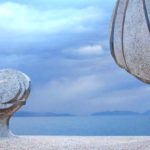
Anavros Park offers a wonderful walk by the sea featuring an aquarium and many sculptures done by well-known Greek and foreign artists. It emerged from the 1st international Sculpture Meeting in 1988. The nearby stream of Anavros was mentioned in Homer's epic.
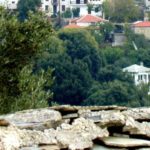
A little village with some 400 residents, Afetes has a great view of the Pegasitic Gulf. Noteworthy are the central square with the church of Agios Ioannis Prodromos (St. John the Forerunner) built by Demos Zoupaniotis from Epirus, known for its stonemasons. Note the mansions and arched bridges of the area too.
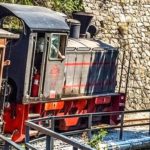
The once famous steam train of 1895, known as Mountzouris, is up and running once again! Today in goes from Lehonia to the town of Milies and was considered a technical marvel in its days passing over seven stone bridges and one metal bridge. Much of it the supporting infrastructure was designed by Italian engineer Evaristo de Chirico, whose son, Giorgio di Chirico was the famous surrealist painter and often included the train and its stations in his paintings.
There are two stone lighthouses on the mainland and three on the Sporades islands (Skopelos, Psathoura and Skiathos). The first, lighthouse of Trikeri was built in the farthest edge of the peninsula of Magnesia, in cape Kavoulia, by the French Company of Ottoman Lighthouses in 1854 with local materials. The nine-meter tower was built in 1918 for operating the rotatating light with petrol. It was supplied with electricity in 1979 and in 1995 it became automatic. The lighthouse of Argironissos which belongs to the Municipality of Pteleos, was built in 1899 on the eastern edge of the island. It operated on petrol initially but during the Second World War it remained closed and started functioning again in 1944. Recently it became automatic, powered by solar energy.
From the 4th century BC during the reign of Philip II, there are remains of a fortified city associated with others such as Iolkos, Orminio and Dimitriada. Promahonas has a fortification with a stone wall which once had 33 towers, a citadel and 5 reservoirs. Also see tombs, quarries and cave of Milihios Zeus.
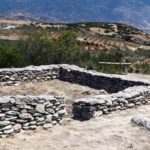
One of the main Neolithic settlements in all of Europe, the settlement on Kastraki hill was inhabited from the 4th millennium B.C. to the mid 7th century. It covered an area of 100,000 m2 in the Neolithic period. Stone foundations of houses are still visible. Pottery and tools were found here too. Worth a visit!
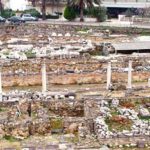
Excavations here have uncovered many important monuments and structures from the Late Roman to Early Christian years. Remains include the basilica of Bishop Peter and the Martyrium Basilica both dating from the 4th - 6th century.