

This UNESCO World Heritage Site is made up of a network of Greek Orthodox Christian monasteries perched atop a complex of 1000 sandstone boulders, each soaring to 400-meters. Soaring to the sky, these imposing boulders were chosen by the first monks as ideal spiritual locations for monastic cells. Beginning in the 12thC, monks attempted to scale the boulders by pushing logs up against the sides of rock pillars, climbing the logs and then dropping rope ladders down for other monks to join them. To this day, monastic cells dot the sheer face of the rock – evidence of the monks’ determination to worship and meditate as close to God as possible.

Built before the 1300s, it’s iconic among Meteora’s monasteries. Its central chapel was built in the 15th Century and adorned in the 1700s with beautiful frescos and murals painted by the monks Nikolaos and Antonios.
Make it a point to admire the frescos decorating the entire Chapel of John Prodromou. They were painted in the 19thC. The chapel itself is built inside the rock pillar, so take advantage of this and explore the inside of these enormous stone boulders that make up Meteora. Admire the woven artifacts the monks are very proud of which are in the monastery’s museum of folklore.
It's open everyday except Thursday.
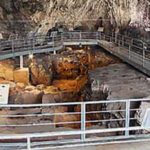
Visit this cave not far from Kalambaka to admire footprints made by kids dating from 50000 – 5000 BC. Serving as proof that the area was inhabited from that time, the cave is archaeologically significant. A Paleolithic skeleton was also found here.
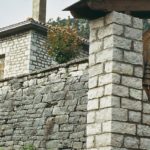
Explore this unique structure close to a lushly forested mountain. Dating back to the Byzantine and Medieval era, it exudes an otherworldly aura and gives you a peek into the architecture of the period.

Trace the region’s archaeological history by taking a walk around Elati. The area is dotted with remains of the ancient settlement of Potneo. Roam the village and you’ll no doubt find remnants of this once-great city.
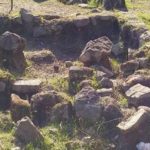
Remains of a temple dedicated to Asklipion Trikkis can be found here, and is thought to be a hospital founded by Asklipion.
Other important sites in the park include a building with gorgeous floor mosaics about Amvrosia who was a nurse-nymph and Lykourgos the Thracean King. Admire the Roman baths, as well as the remains of a 10thC Byzantine church.
The archaeological site is accessible after applying permission from the archaeological authorities.
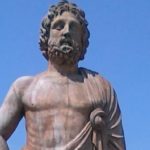
Trikala is the birthplace of Asklipios, the Ancient Greek god of medicine. Born in the region, he used the vast variety of medicinal plants and herbs found on the slopes of Koziakas mountain to formulate cures for his many patients.
In fact, Koziakas mountain is known as Asklipios’ pharmacy, in tribute to the god. Trikala also plays a part in Greek mythology, as it’s named after Trikki – a nymph and daughter of Pinio River. First inhabited in 3000 BC, Trikala played a vital role throughout the ages.
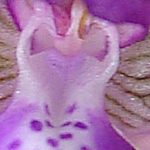
If you're into studying nature, you're going to love this gem of a place. The Centre for Research and Protection of Wild Orchids in Northern Pelion was established in 2012 and lies in the old school of the village of Kerasia, not far from Lake Karla.
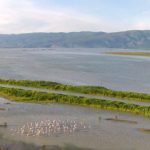
Lake Karla, between the prefectures of Larissa and Magnesia, was one of biggest in Greece and the most important in Thessaly, existing since ancient times. The lake supported numerous species of fish and birds and also thousands of inhabitants that lived around it. It was drained in 1962 to make cultivable land, an experiment that didn’t work well for many reasons. A reservoir with brackish water created in 1989 in part of the drained lake. It is used for irrigation, migratory or non-migratory birds wintering here, recreation, educational and scientific aims. As the land turned out not to be as arable as expected, and with the support of EU funding, Lake Karla has been regenerated. The repercussions on the biodiversity of the area are expected to be positive, and you can read more about it here.
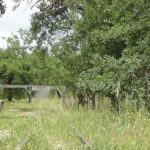
The Kouri forest is an important part of Almyros with its huge oak trees. It is a unique European forest in a plain about 1 km northwest of Almyros and 500 meters from Efxinoupoli. The forest is divided into two parts. The first part hosts a Municipal Pavilion, a church, hunter's kiosk, playground and sport facilities. The second part across 700 square kilometres features a walkable forest, three artificial lakes, a Folklore Museum and wild animals roaming free such as wild sheep, deer, ducks and other birds. In 1993 a train around the lakes was revitalized and covers a distance of 660 meters. The church of Agios Nikolaos from 1902 is another interesting site worth a visit.