
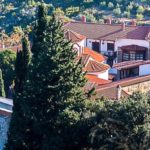
Once an important center for liturgical life and the study of religious chanting, the monastery was founded in 1586 by the monks Dionysios and Neilos, on the south side of Samos, and was dedicated to the Assumption of the Virgin Mary. During the Ottoman Occupation it contributed to the secret schooling in the Greek language, and during the revolution of 1821 became a base for local combatants.
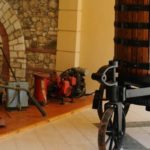
Originally a private owned winery, the museum was created in 2005 by the Union of Vinicultural Cooperatives, who in 2005 created this museum on the winery's grounds in tribute to the island's noteworthy winemaking tradition. Tools, lab equipment and machinery used for winemaking over the last century, examples of early 20th-century casks, and the French oak barrels used today, and a photo exhibition offer the visitor an enjoyable visual journey, while the museum also has a tasting room that offers a journey of the senses.
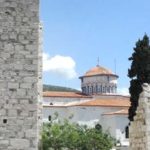
The permanent exhibition presented in the Tower is made up of archaeological finds from excavations carried out at the castle on the same hill as the museum and in other areas where Byzantine ruins and monuments remained. The museum exhibition is separated into six thematic segments and covers a wide part of the island’s history from late Antiquity until the 19th century, with a special focus on the early Byzantine era. The audio-visual presentation also includes information on the life of Lykourgos Logothetis, fortress architecture in Aigio and Samos and the daily life of locals.

Created in honor of a profession that was popular from the start of the 20th century and until a few decades ago, the museum is suitably located in a renovated old tannery. It presents tannery tools, machines from different periods, samples of leathers worked on by local tanners, and other materials, as well as photographs depicting the history of the trade in Karlovassi.
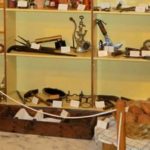
Founded in 1994, the museum hosts items from the year 1870 until the mid 1900s that present agricultural as well as urban life in Karlovassi. Visitors can see a variety of objects that represent the town’s culture and way of life such as farm tools, a weaving loom, valuable porcelain items, skillfully carved mirrors, embellished furniture and elegant garments once worn by the city's most prestigious ladies.
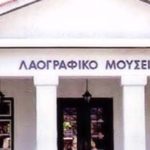
At this museum visitors can revisit the way of life of Samos residents leading up to WWII. The museum is separated into thematic units presenting the professions held in that era, professions such as those of the shepard, fisherman, cobbler, and most importantly for the island, the farmer and agricultural work.Parallel to this exhibition the visitor has the chance to explore the Monokamaro (one room) traditional home and see how people on the island experienced their daily life. Traditional handicrafts, men’s and women’s costumes, baby clothes and cribs and other household furniture and decor items are all included among the valuable and telling exhibits.

The island’s archaelogical museum is located in the heart of the main town, and housed in two buildings: the old museum (Paschaleio archive center) and the new museum. It holds collections from various eras, but chiefly the Archaic period. The most famous among the numerous impressive exhibits at the museum is a giant marble statue of a kouros, or young man, unearthed at the Heraion, which is dated to the 6th century BC and stands at 5,5m high.
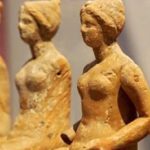
Statues, columns, sarchophagus, and beautiful pottery are just a few of the finds exhibited at the museum, located in the city centre of Pythagorion, next to the site of the ancient town of Samos. The museum presents the historical course of the island, from the 5th millennium BC until the 7th century AD. Major exhibits include a seated statue dedicated Aiakos Hera (540 BC), the 2.7m tall statue of Emperor, and large marble sarcophagus’ from the second half of the 6th century BC, as well as a marble portrait of Augustus and one of Claudius from the Roman era.
The Harlaftis estate is one of the more respected Greek Wineries. The family has been in the wine business for 60 years. The Athanassiadi brand is a good everyday wine, while the Chateau Harlaftis is for more sophisticated palates.