
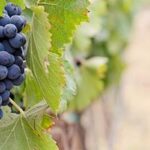
Gaia is said to explore Greek varieties to their limits, thanks to dedicated Greek agriculturalists and oenologists. There are many 'outside-the-box' varieties to try at this winery for a surprising effect.
The Lafazanis family has had a love affair with wine since 1946. A modern facility that produces organic wines from the Agiorgitiko grape can be found in Nemea. The wines represent very good value for money.
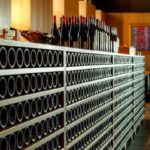
With amazing value for money, Domaine Skouras offers small quantities and great vintages to the visitor. This is just a few minutes away from Argos and the winemakers will greet you with hospitality.
Using the well-known Agiorgitiko variety, the Repanis family matures its wines in oak barrels underground for an exquisite velvety wine. Located at the foot of the Panagia mountain and at the entrance of Nemea (ancient Greek city), the farm has a winery museum and a grand hall to host events.
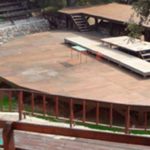
The city’s ancient theater stands on a slope under Spiliani mountain. It was built during the Roman era and seems to have had a stagem orchestra pit and seating area.
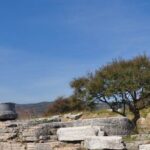
The Heraion was built 580 BC by the architect Theodoros, in honour of Hera, Zeus’ wife and Godess of the Hearth. Four times larger than the Parthenon (108.73 meters long, 54.8 meters wide and 25 meters high), this is the largest temple ever to be built in Greece. Yet, only one of its 133 columns remains standing today. The entire area at the Heraion was dedicated to religious worship, and the remnants of at least four temples are to be found there, and the temple was connected to a four meter wide tiled (Sacred) road that led to today’s Pythagoreio and which was lined with statues and votive offerings.
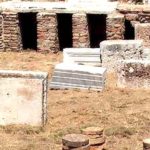
The Thermes, or baths were a complex built on the east side of the athletic complex where the gymnasium and palestra (wrestling school) were, during the latter part of the second century AD, and have been very well preseved. Their walls were decorated with marble and the floors were covered with mosaics. A small vaulted room, the laconicum or sudatorium (a type of sauna) was turned into a baptistry in the late fifth century AD, around which a three aisled Christian basilica was built, and in the seventh century one of the north western bath chambers was turned into a tomb.
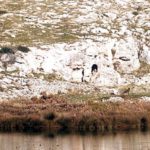
The Phrygian mother goddess Cybele from Asia Minor, later known to the Greeks as Rea, was the goddess of wild nature and the creative forces of the earth and fertility. On the western and northern fringes of the upper city of ancient Samos, outdoor shrines dedicated to the godess were carved into the rocks. Access to the sanctuaries came from two roads, one which led to the temple of Artemidos and the other that came from the ancient Agora. At the highest point of the hill on which the ruins lie, a large rock carved in the shape of two throne-like seats was found.
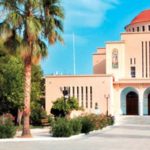
In Korinthos (Corinth) visit the Agios Pavlos Metropolitan Church with its rich decor and exhibits, as well as a Religious Museum.
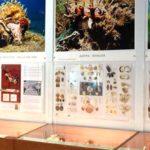
This popular museum (receiving around 30,000 international visitors per year) presents a rich and varied number of paleontological finds. The visitor can explore exhibits among which are 350 types of fish and shellfish, 40 bird species, 30 kinds of animals, reptiles and amphibians of Samos and around 3000 kinds of Greek herbs.