
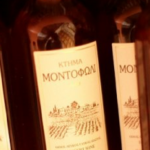
For over 25 years, the Karakostas Family has been producing award-winning wine from the vines of the beautiful Montofoli Estate just outside of Karystos.
The paleo-Christian church of Agios Leonidis – in the alleged area of ancient Kallion – dates from the 5th century, with its superb mosaic floor that measures 28 x 18 meters. It has amazing designs and colours. In addition to the mosaic floor, the Holy Altar and seat survive in this church.
It was built in middle of the 16th century. Today the chancellery is all that remains of the large monastic complex that was in the Sotira area. It was renovated in 1725 and features rare Byzantine style murals dating from 1735. There is also a wood carving dating from 1737.
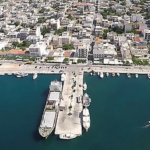
In the centre of Karystos, a restored family mansion which belonged to the Moskhona family houses a wide range of items dating back decades ago. The items were donated by H. B. Deligiorgi and include traditional costumes and clothing, tapestries, antique furniture, farming tools and a large number of old photographs.
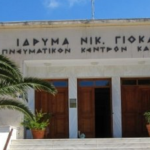
Karystos’ Archaeological Museum as well as the Giokalio Institute are housed within the same building along the coastal road of Karystos.
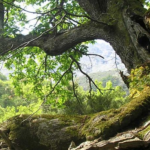
Get an in-depth look on the history and mystery of southern Evia’s Drakospita as well as its numerous plant and animal species at the Centre for Environmental Awareness between the villages of Kalyvia and Nikasi just north of Karystos.
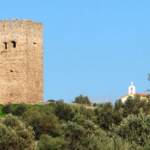
Just outside the village of Koutoumoula, travellers have the opportunity to see one of the best preserved Venetian towers throughout the country.
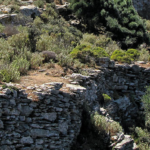
Four kilometres north of the village of Giannitsi lay the ruins of this castle which offers its visitors incredible views over the plains below as well as the Aegean to the east.
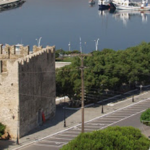
Karystos’ coastal fortress lies just at the edge of the city along the waterfront. It remains in such well-preserved condition that it’s hard to believe the structure dates back more than 700 years.
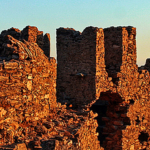
Standing sentinel above the seaside town of Karystos, Castello Rosso or “red castle” is one of Evia’s most well-known monuments.