
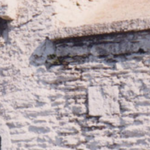
The remains of this church first built in 1260 AD can be seen in the area of Platanaki about three kilometers north of the village of Aetou. Today only the main portion of the church is still intact, with the connected monastery lying in ruins.

This octagonal church dating back to the 10th century BC can be found in the village of Kalyvia at the foot of Mt. Ochi. It is still in remarkably good condition, featuring a dome, four interior columns as well as four on the outside. The marble floor was constructed with local marble by residents from the wider area.
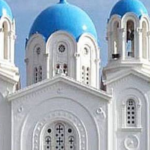
Situated in front of a park within Karystos’ centre, the grand church of Agios Nikolaos is the town’s most-well known. Featuring three blue domes and a triple-arch doorway, this three-storey church honoring the patron saint of sailors has been around for more than half a century.
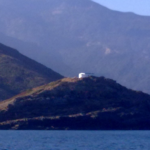
Overlooking the treacherous Cape Karifeas, known for its many shipwrecks both throughout antiquity and during the present times,stands the small picturesque chapel of Agios Georgios. Consisting of a small, single space, this simple church features a stone roof and has been constructed with local stone. The simple cross on its roof as well as its blue windows and doors give it an authentic charm missing from several other churches throughout the area.
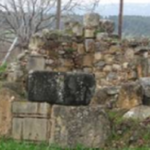
Orginally built as two separate chapels (Agia Triada and Agios Spyridonas), today only Agia Triada has been preserved outside the eponymous village, with the neighbouring Agios Spyridonas in ruins. The church contains a ceramic tile roof with a dome and features a byzantine-style layout.
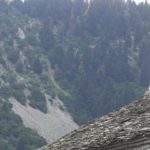
This church was built in 1772 and contains fine 18th century murals.
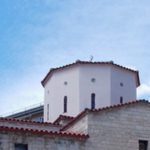
The Byzantine church of Agia Triada was renovated in 1645 by the well-respected teacher Eugenios Giannoulis of Aitolos who taught Byzantine music and then established a school in Karpenissi.
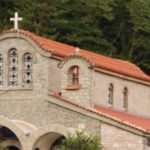
This is a very special church because it features a very rare relic – a silver case about 700 years old that contains the holy hand of the Evangelist Luke.
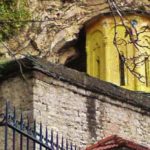
Here's a monastery tucked away in the rocks. It was built in 1550, with its main church containing icons from the 16th century. Dedicated to the Birth of the Virgin, this monastery is one of the more important in Agrafa. It does not function as a monastery proper anymore but can be visited.
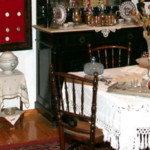
In the centre of Karystos, a restored family mansion which belonged to the Moskhona family houses a wide range of items dating back decades ago. The items were donated by H. B. Deligiorgi and include traditional costumes and clothing, tapestries, antique furniture, farming tools and a large number of old photographs.