
Patmos boasts three mountains that offer nature lovers and ecosports enthusiasts a wonderful way of exploring the island’s natural beauty. Tour Patmos’ three mountains, without any routes to guide you, and you’ll feel like you’re on a true adventure. Genoupas Mountain and Hondro Vouno Mountain offer a number of lush landscapes for nature lovers, including small forests, herbal underbrush and a route through farmland that’s traditionally plowed using oxen. Then go up Profiti Ilias, the island’s highest peak, to admire the stunning view.
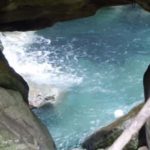
Remains of the ancient city of Ipnon lie near Horefto, a seaside village in Pelio. A sailboat can take you to the old Migela (Mitzela) and the old impressive caves at the ancient city of Ipnon.
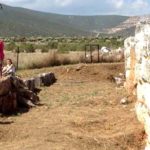
On the plain between Mount Othrys and Chalkodonio lie remains of the Hellenistic town of Alos. Findings such as vessels, tools, jewellery and remains of houses attest to the importance of this city once upon a time.
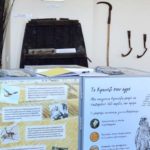
In the village of Kanalia near Lake Karla, the Museum of Lake Karla's Civilization offers precious insight on life around the lake before it was drained, how the livelihood of the inhabitants was compromised, and what opportunities exist for its future.
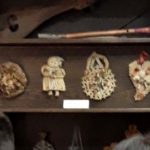
Located in the two-storey home of folklorist Kitsos Makris, the center displays his folklore collection, a library with 4,000 volumes of books and his archive, and a collection of 2,500 slides and 4,000 photographs, many of which illustrate treasures of folk tradition that cannot be found in the present day. The museum belongs to the University of Thessaly since 1989.
Visiting hours: 09:00 – 14:00 (closed on weekends).
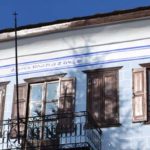
Housed in the Zoulia mansion, the museum presents artefacts on the economic and cultural development of the area from 1900 and to the mid 20th century.
Learn more about the lesser kestrel! An information centre about this wondrous bird funded by the EU LIFE programme (LIFE+ 11 ΝΑΤ/GR/001011) was established beside the local high school in the village of Kanalia, not far from Lake Karla.
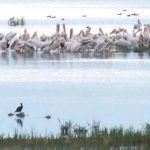
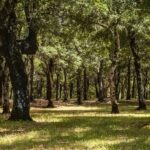
The varied geography of this area gives rise to numerous different habitats. It is the stomping ground of a significant variety of reptiles, amphibians, mammals and fish, most of which are protected under national and European legislation. Previously, Lake Karla had great fish populations. The species found in the lake today is the carp, the Tsironas and butterfly, and there are efforts to regenerate the area. Not far off, the Polydendri forest is rife with wildlife, including the wildcat lynx, wolf, deer, hare, wild boar, etc.
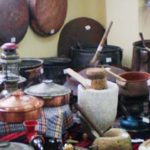
Created in 2010 by members of the Nea Karion Women’s Association, the Folklore Museum presents aspects of the village’s cultural and social life over the past two centuries. Household items, handicrafts, agricultural tools, religious statues and traditional costumes all grace the exhibition space, while the museum also displays a photo exhibition and paintiungs by Dinos Giotopoulos.
If you're into studying nature, you're going to love this gem of a place. The Centre for Research and Protection of Wild Orchids in Northern Pelion was established in 2012 and lies in the old school of the village of Kerasia, not far from Lake Karla.