
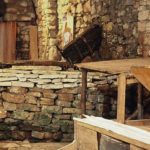
Dimitsana has an open-air hydraulics museum which has revived the water mills of the town and is a true eco-friendly museum. Its shop sells books on hiking and other subjects of interest to the eco traveller. It has even helped the economic prosperity of this traditional region, and should be visited by all means!
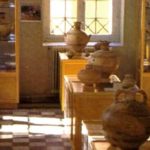
Housed in a neoclassical building – formerly a hospital – designed by Ernst Ziller, the museum boasts 7000 finds from Arkadia, including prehistoric, Mycenaean, geometric, archaic, Classical, Hellenistic and Roman artefacts. Clay idols, jars, children's toys, figurines, glass, pottery, votive reliefs...
See neolithic and early bronze-age items from Agiorgitika and Asea, as well as sculptures from the temple of Alea Athena at Tegea and the area. Small objects from the temple are also found, plus inscriptions from the archaic to the byzantine era, and reliefs form early Christian/Byzantine times (Episkopi Tegeas).
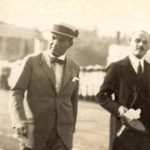
Delve into the life of this local politician and prime minister of Greece from 1924 to 1932. Photographs from his family life, military life and political life are on display, as well as personal belongings, including letters in German and large personal library.
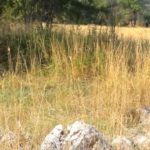
The remains of a prehistoric settlement have been found in the area of Kafyes.
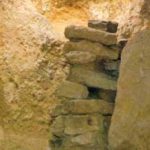
Around 100 rock-cut tombs of different types (chambers, tholoi, pit-graves, well-shaped graves, etc.) and a temple for religious ceremonies have been uncovered here from the late Mycenaean era, matching Homeric texts about Necyia in the Iliad. The sites artefacts are at the Archaeological Museum of Tripoli.
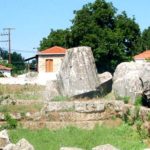
Going back to the the first half of the 4th century BC, this temple is the largest in the Peloponnese after that of Olympian Zeus in Olympia. There are remains of another temple under it from the Archaic period, as well as of a Byzantine basilica from much later.
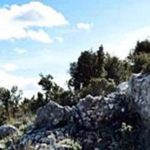
The medieval town of Tavia boasts remains of buildings and a castle, supposedly built with stones from Dipaia, a more ancient site.
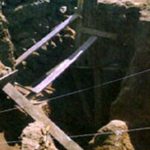
Α huge metallurgical kiln, which is considered the largest kiln of Prehistoric times (before 2000 BC) was found in this area, along with washing facilities, tanks and workshops, and interestingly from the Roman period as well have been revealed at the site. The kiln was used for melting and improving copper ores. In Roman times the kilns were probably used to remelt metal scrap.
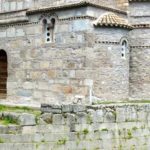
Excavations have revealed parts of a theatre from the Hellenistic period (175 BC), an agora from the Hellenistic and Roman period, two early Christian basilicas (5th-6th century AD), amazing mosaic floors and parts of a Byzantine settlement (10th-13th century AD). In the middle ages the area was called Nikliou.