
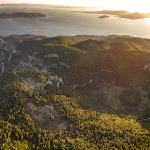
In the plains below the mountaintop known as Chelona, you will come across the ruins of an ancient edifice which could have been a temple, along with columns from the geometric period. Mythologically this area is connected to Aethra, daughter of King Pittheus of Troezen and mother of Theseus.
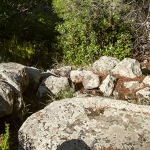
Along the volcanic caldera known as Stavrolongos, there’s a plain that was used for centuries for agriculture, up until the turn of the century. The Varkeza Plain, as it is called, is home to a variety of prehistoric remains.
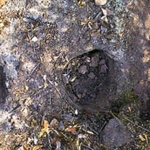
At the northern edge of the Methana peninsula, near the village of Kounoupitsa, there are remains of a temple dating back most probably to the geometric period (900-700 BC). Columns formed out of volcanic rock and polygon-shaped blocks that form parts of walls are clearly visible, the latter in some cases forming walls that are around 1.5 meters in height. A walk up the hill with more ruins on the righthand side of the path will lead you to what was probably an ancient basin for pressing grapes to make wine. Several stones lying among the bushes along this path have holes chiseled within, implying their use as parts of an olive oil press or wine press.
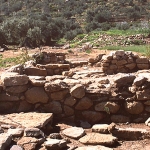
A prominent Greek archeologist, Eleni Konstolakis Giannopoulou, worked on excavating this site. The excavation revealed the existence of a Mycenean temple that dates from somewhere between 1600-1200 BC, along with numerous clay figurines and objects depicting chariots, riders, furniture and more. The site also revealed a graveyard for children and other significant objects such as a rhyton (conical drinking jug) with an end that was shaped like the head of a pig. Several of these objects can be seen in the Archeological Museum of Poros which is half an hour away from Methana. While not well documented, the site is considered an important one in revealing the region’s history.
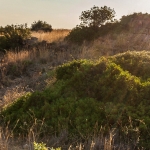
The Acropolis Oga is considered one of the most mysterious as nothing is really known about its history. Scholars suspect that there was a temple there to worship the god Poseidon Fytalmios, as mentioned on a rock inscription that is now displayed at the Methana cultural center. Once you climb to the summit, you will find an ancient cistern, along with the remains of an ancient wall and a tower.
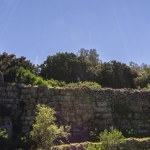
Near the quiet fisherman’s village of Vathy on the south side of Almyra beach there’s a prehistoric lava dome that represented an ideal location for a castle. Known in Greek as Paliokastro (old castle), this site is what is left of a larger settlement – possibly an ancient city – whose remains are most likely still buried in the area. If archeologists ever dig around this area, they should expect some fine discoveries.
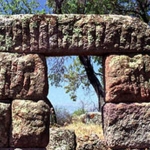
The remains of a watchtower from the Hellenistic era in Throni, not far from Methana, is one of those archeological finds that are only known to people who are very familiar with the area. First described by German archeologist Michael Deffner in 1912, the tower lies in a gorge northwest of Methana in a valley between two hills, above the little church of Saint George. The walls rise to almost 2 meters with a visible doorway. You can clearly see the four sides, each about 8 meters in length.
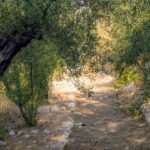
Prepare yourself for an enchanting trip through the land of olive oil in the heart of the Peloponnese. A visit to Melas Olive-Oil Estate and its olive groves will amaze you and teach you all you need to know about this "green gold".
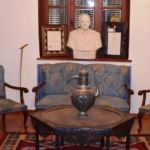
Highlighting the rich cultural heritage of the Zagori region, the Agapios Tolis Folklore Museum offers its visitors a truly intriguing glimpse into the past. Entire traditional kitchen sets are on display as well as traditional furniture, tools, clothing and jewellery.
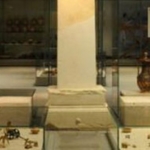
Ioannina’s Archaeological Museum is home to a large selection of interesting finds not only throughout Ioannina, but from the entire region of Epirus. The artefacts within the museums span several millennia, with exhibits featuring items from the Palaeolithic era including stone tools. There are also some interesting statuettes from the nearby site of Dodona.