
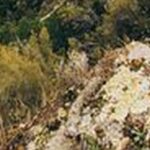
To reach the Lissos Gorge visitors can take a small boat from neighbouring Sougia (about 20 minutes), or can arrive by foot which is about a 2 hour walk. The entrance begins at the harbour of Sougia and a good deal of the pathway is uphill. The entrance begins at the harbour of Sougia and a good deal of the pathway is uphill. There is beautiful vegetation throughout the gorge and towards the end of the path a gorgeous pine forest offering up a view of Lissos below. At the bottom of the hill lies ancient Lissos including the temple which can be explored on foot. (See Lissos in the archaeology section).
Just west of its more famous sister, Samaria, the Klados gorge awaits. Offering up breathtaking scenery with its imposing jagged rockface and waterfalls, the Klados gorge is a remote and little traveled terrain. Its northern entrance begins from the Linosseli pass west of the Gigilos peak and is marked only by a few piles of rocks. This path, as with others along much of its route, is often blocked by bushes which only contribute to the danger by hiding its steep drops. Just before the entrance there is a very dangerous spot with loose gravel on a steep slope. Navigating the Klados gorge does require descending by rope in various areas. There are cascading waterfalls along the way and at the end a gorgeous beach called Tripiti.
Just east of Samaria is the very narrow, verdant Eligia gorge with its steep drop and abundant foliage. The path to its entrance begins at the Katsiveli mountain shelter. It is more walkable than either Tripiti or Klados, marked with small piles of rocks along the way, but there are a number of secondary paths that can lead visitors to become easily lost so a guide is recommended. At the end of the gorge the isolated village of Agia Roumeli with its pebble beach and breathtaking views of the Libyan sea is approximately a one hour hike away. Agia Roumeli is only accessible by boat or on foot and well worth the hike
A delightful surprise to walk or drive through, many visitors to western Crete remember the Topolia gorge not from hiking it but rather from driving along the winding road that cuts through it (and part of a mountain where a tunnel was dug to allow the road continue). Known to locals as the 'Gorge of Caves' because of the many that are found along its route, this majestic gorge is located just south of Kissamos and is rich with vegetation. Its path begins just after the village of Topolia and extends for approximately 1.5 km. One of its most impressive features is the shadows that fall onto its rock faces mid-afternoon - a stunning sight to behold.
Found close to the city of Hania, the Theriso gorge is approximately 6km long and can also be visited by car. Easily navigated with a well laid pathway this is a good opportunity for people with families to take to the outdoors and do some hiking. The Theriso gorge sits amongst the foothills of the White Mountains; a small stream runs through part of the gorge and adds to the abundant plant life which makes for fantastic natural scenery and an abundance of greenery everywhere.
Just less than 20 km west of Sfakia lies the Aradena gorge which begins on the softer southern hills of the White Mountains and ends at the cobalt coloured waters of the Libyan Sea. Pictures of the gorge's dramatic sloping edges falling into the sea are unforgettable and it is easily one of the most picturesque in the Hania region. The gorge is approximately 7km long and takes approximately 3 to 4 hours to hike. There is an area where hikers must descend a metal ladder attached to the cliff, although there is an alternate route with a handrail. The descent itself is difficult but manageable but hikers should be forewarned about falling stones. At the end of the hike there are paths to Marmara, Loutro and Sfakia.
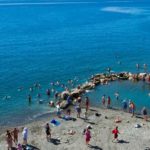
This stunning beach has combination sandy and pebbled shores as well as therapeutic thermal springs that flow into the sea.
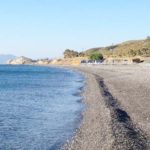
This is a perennial favorite among surfers. It boasts a unique formation with lots of small coves.
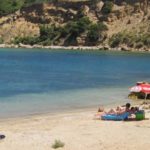
If you’d like to feel like you’re alone on a deserted island, then go to Limnionas. With beautiful blue-green waters that sparkle in the sun and fishing boats dotting the shore, you’ll surely return.
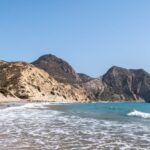
Perfect if you love snorkeling, its rocky underwater landscape will give you much to explore. If you’d rather take a swim, you’ll be stunned by the view of beautiful Kastri Islet.