Corfu (Kerkyra)
Ask anyone – foreign or native – why they keep returning to Corfu (Kerkyra in Greek) year after year and you’ll get a myriad of answers: the blue-green sparkle of the island’s crystal-clear sea, the heartfelt welcome of the locals as they greet you with their lyrical lilt, the plush green landscape that unfolds on winding horseback riding trails, the lingering noble atmosphere that permeates the Old Town’s cobblestone streets. And it’s precisely this varied tapestry of responses that reveals the island’s secret – Corfu magically and majestically embraces all your senses, enchanting and luring you deeper into the cultural and natural beauty that exists at the heart of this Ionian island. Read more bellow...
For loyal Corfu fans, the island’s timeless popularity is rooted in its authenticity. Quaint family-owned tavernas that dot small coves, handmade soaps and fruit preserves on display in the old Venetianesque capital, classical music concerts in town squares, troubadours of all ages singing romantic serenades as they wander the narrow streets, and strolls through Corfu’s many renowned museums and one-of-a-kind art ateliers all offer a sense of what everyday life is like for the local Corfiots. And beyond the more bustling areas lies a more laid-back but equally beguiling side to the island with secret wonders tucked away in small villages and solitary beaches waiting to be explored.

Rich in heritage, history and mythology
Corfu’s aristocratic charm springs from its rich cultural and geopolitical history. Even its mythological beginnings - and its name - capture the romance of the island. Legend has it that Poseidon, god of the sea, fell madly in love with Korkyra, a gorgeous nymph, and promptly whisked her away to a previously unknown island where their love affair flourished. To honour their romance, he named the island after her and in time Korkyra island became known as Kerkyra. The fruit of their union, a son called Phaiax, bestowed his own name upon the island’s natives who were then referred to as Phaiakes or Phaeacians in Latin.
The island’s more “literal” past begins with archaeological artifacts, including tools and bones, found in Grava Gardikiou cave at the foot of Mount Agiou Matheou (Saint Matthew) in the southwest which prove that Corfu was inhabited from the Paleolithic era. But it’s Corfu’s strategic location on shipping routes to the Adriatic and Italy that played a major role in determining its subsequent history. Normans, Venetians (1386-1797), French and British all occupied Corfu from the Middle Ages onwards, effectively preventing it from being conquered by the Ottomans and adding to Corfu’s rich and varied cultural, economic and architectural landscape. Especially under Venetian rule, Corfu resisted Ottoman sieges, diversified its economy and agriculture, established a new administrative system, developed its military fortifications, began creating schools, and embraced artists, musicians and scholars from mainland Greece and the rest of Europe.
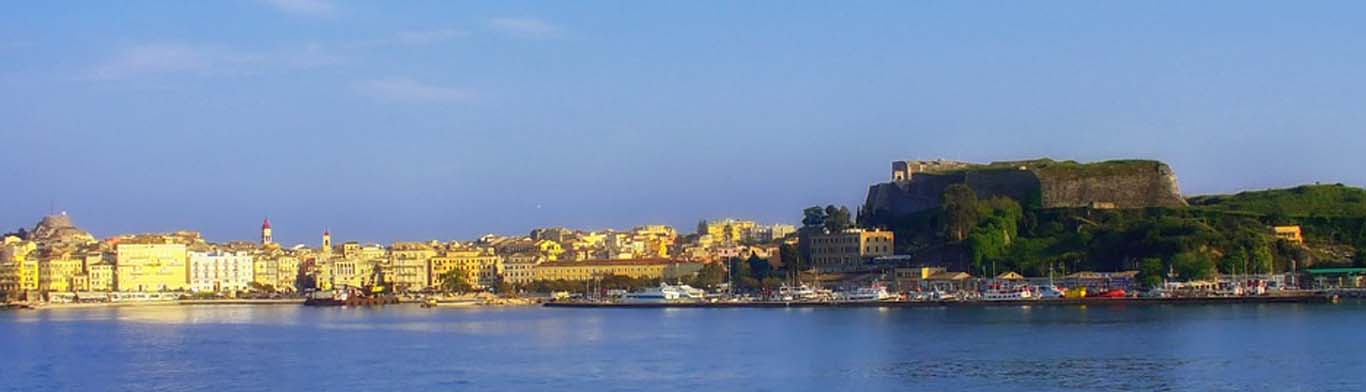
Everything about the island reflects and exudes Corfu’s unique heritage, and no single place more so than the Old Town and its surrounding areas. A UNESCO World Heritage Site, the Old Town lies within the island’s capital (also called Kerkyra) and offers visitors a colorful palette of interesting monuments, buildings and churches. Begin by casually exploring the town itself – roam the maze of narrow cobblestone streets (called kantounia) and alleys hugged by towering pale yellow and white Venetian-style buildings. Look overhead and you’ll see rows of clothes-lines strung above the street, laden with the day’s colorful wash gently flapping in the wind. Turn the corner and you’ll bump into hidden squares, old churches and neoclassical manors accompanied by beautifully crafted marble fountains and wells.
A treasure chest of landmarks and traditions
Lining the cobblestone streets you’ll find an assortment of small shops boasting the island’s traditional wares, including famous liqueurs and preserves made from kumquat - a citrus fruit that resembles a miniature orange that can even be eaten whole - which have become almost emblematic of Corfu.
When you’ve basked in the feel of the Old Town, head for its treasures: Nobile Teatro di San Giacomo di Corfu (Saint James’ Theatre), built in the 1600s and the first of its kind in Greece, was an illustrious theatre where Italian and Greek composers staged plays and operas to the aristocracy’s delight. Now Corfu’s City Hall, it served as an informal audition for operas destined for the Scala di Milano in its glory days. Visit Campiello, the town’s oldest quarter, where you’ll hear snippets of everyday conversation float out into the stepped streets from tightly-huddled homes with family crests above their doors and windowsills adorned with red and fuchsia geraniums in terracotta pots. Once in Campiello, don’t miss Saint Spyridon Church with its impressively tall belfry. The embalmed body of the island’s patron saint lies within the church for pilgrims to worship.

Making your way back from Campiello is like fast-forwarding through history as you move from elegant Venetian architecture and a haunting medieval mood to regal French and British influences. Spianada (literally Esplanade) is an excellent place to begin exploring this more modern 19th Century part of town. Vast open spaces and rolling lawns make up this enormous square, where you can take a leisurely stroll down chic paths to the Palace of St. Michael and St. George. Located in the lower part (Kato Plateia) of Spianada square, this beautiful Georgian building was commissioned by Thomas Maitland and originally housed the offices and residences of the British Commissioners. Now it is home to the Museum of Asian Art - one of few such collections in Southern Europe - and the Municipal Art Gallery. From the Palace (also called Palaia Anaktora or Old Palace in Greek) you can easily walk to the Old Port and Mouragia with its medieval sea walls and charming coastal townhomes.
Once you’re back in Spianada Square, stop for mouth-watering homemade pastries at one of the many cafés (some dating back to the early 1900s) that line the wide pedestrianised Liston – you’ll think you’re in Paris with a Corfiot twist. Designed by the French in the 1800s, the tall arcaded buildings now house fashionable restaurants and cafés on the colonnaded ground floor - complete with old-fashioned street lamps adorning each arch - while across the street dozens of tables and chairs invite patrons to rest in the welcome shade of centuries-old plane trees.
Idyllic villages beyond the city
Feel like exploring Corfu’s beautiful countryside? Over one hundred villages lie in wait by the sea or up in the mountains – just grab a map, jump in the car and you’re off. And don’t worry about getting lost. The friendly locals are more than willing to point you in the right direction, or even take you there in person. Hlomo village is one such must-see. Straddling Merovigli mountain in the southern part of the island, this traditional Corfu village full of music-lovers dates back to the 13th Century and offers visitors breathtaking panoramic views of the cedar forest and Korission Lake. Its layout reflects its medieval beginnings, with winding cobbled streets and Italianate homes painted the standard Venetian reds and oranges. You’ll be in for a real treat when you visit Hlomo, as its choir and traditional Greek dancing troupe are the village’s pride and joy. They put on regular performances for tourists and locals alike, so ask a villager when the next concert will be.

Nymfes is another stunning village that can’t be missed – especially if you’re interested in local lore. Fascinating tales abound about this traditional village in northern Corfu, which - according to local legend - was the beloved home of many kind fairies. Go see the cascading waterfalls where villagers often spotted fairies washing their hair, and walk through the blanket of wildflowers and lush kumquat groves that frame the beautiful village of Nymfes. Close-by you’ll find two interesting and unique attractions: the now-deserted Corfu School of Agriculture (founded in 1932, its oil press is still there and can be visited) and a 5th Century cave-like monastic cell (called “askitario” in Greek) which the monk reportedly dug into the side of the mountain himself using only his hands. But before leaving Nymfes don’t forget to stock up on delicious kumquat jams and liqueurs made by the local community-owned Agranthi co-op.
Fabulous fauna and flora...

Take advantage of your time out in the countryside to fall in love with Corfu’s natural wonders. The island is a veritable year-round paradise for nature-lovers and eco-tourists as it offers a range of sites and activities, from lush forests and thriving lake ecosystems to a unique water-sandwiched desert and beautiful mountains. Begin by exploring the southern region of Corfu, where you’ll find Arkoudila forest in close proximity to and within easy access of Cavo, one of the island’s most popular areas. Follow a very modest dirt road to Arkoudila and then hike through and admire the forest all the way to the coast where you’ll be rewarded with stunning views from atop a dramatic cliff. There’s no better way to end your excursion than a refreshing dip in the beautiful turquoise sea – simply follow the sign that leads you down a small path to the peaceful isolation of Arkoudila beach.
Birdwatchers will be thrilled with the sheer number and variety of birds they’ll find in Corfu and especially at Korission Lake. Part of the Natura 2000 network and a thriving and vital ecosystem, Korission Lake in the south-western part of the island is an important stop for migrating birds on their journey from Africa to Europe. At certain times, over 2000 birds seek refuge in the Lake, including a wide variety of waterbirds, flamingos, and swans as well as falcons. Reptile enthusiasts won’t be disappointed either, as the lake is a perfect habitat for terrapins and turtles.
Once you’ve explored Korission Lake, head for the beautiful sandy beach nearby – except you’ll have to take a detour through a desert first! A stretch of Sahara-like sand dunes lies between the Lake and the sea, created as the sea slowly receded over the past 2 million years. A truly unique phenomenon of this desert is the Kedrodasos (literally “cedar forest” in English), where thickets of small cypress-like trees that belong to the Juniperus family sprout from the sand to compose a stunning, one-of-a-kind landscape.
Eco activities ad infinitum
In addition to more sedate activities, Corfu provides plenty of action-packed options for sports fans. You can explore the island on horseback and take winding rural trails through mountains and silver-green olive groves. These tours are led by experienced local riders who will regale you will tid-bits of the island’s “secret” history. Walking vacations are also becoming increasingly popular, especially with the 220 km Corfu Trail that spans the length of the island and unveils a varied and pristine landscape that’s often overlooked by tourists. Cycling is another excellent way of visiting all the picturesque villages the island is so proud of, including gems like Pelekas in the west and Sokraki up north, and immersing yourself in Corfu life like a local. Adrenalin junkies can look forward to endless days kitesurfing and windsurfing while avid mariners will find dinghy sailing in Avlaki bay a highlight of their stay.

Corfu is also the perfect holiday destination for amateur farmers and people interested in agrotourism. Family-run farms welcome visitors into their fold and show guests of all ages how to milk cows, tend to the chicken coop and help out with the farm’s vegetable patch. And you can return home with practical skills and tips by taking classes on how to make your very own homemade soap and how to cook your favourite Greek dishes like a native.
Animal lovers can turn their passion into action in Corfu, where rescue centres and shelters always need volunteers. Corfu Donkey Rescue is a safehaven for abused and abandoned Corfiot donkeys that not only welcomes visitors throughout the year but also trains volunteers in the everyday care of the donkeys. The Silva Project, also a charity, helps shelter and heal Skyrian horses in need and runs a riding centre that provides therapeutic riding lessons for children as well as regular classes.
Corfu offers it all, from music and art to sports in the sun, as the island and its friendly natives slowly cast their spell, enchanting and pulling you into their unique melody.
Let them. You’ll love every minute of it.
This article on Corfu and all its sub-sections was were written exclusively for ecotourism-greece.com by Christina Condomaros