
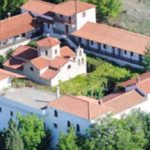
The Orthokostas Monastery of the Transfiguration features a marvelous 12th century church with notable Byzantine wall paintings. An Ottoman tower is found nearby.
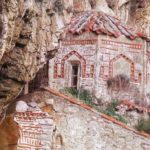
Founded in 963 AD by Ioannis Lambardopoulos – philosopher at the court of Emperor Nicephorus Phocas – the monastery was meant to Christianize and Hellenize the Slavic settlers in the region. It moved down from the rocks by the Lousios gorge in the 17th century. Note its church of the Dormition, icons and wall paintings.
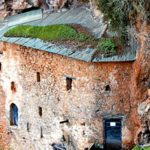
Near Valtesiniko there are two churches that are built in a double cave. Their wall paintings date from the 14th and 15th centuries. The churches were eventually destroyed by the Ottoman troops of Ibrahim Pasha.
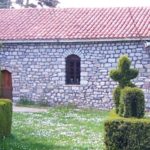
This 16th century church has fine wall-paintings and pretty woods close by. The remains of a Byzantine fort can be seen on Aimilianos hill which affords a good view of Mount Chelmos (or Aroania) and Mount Erymanthos.
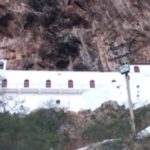
Right above the village of Kandila in Mantineia on the steep mountainside, this nunnery has suffered damage in the last couple of hundred years. In the rocks behind the church lies a cave that's used as a fridge.
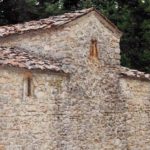
The beautiful road from Dyrrachi to reach this historic monastery is an experience in itself. The monastery featured a secret school and harbored hearoes from the Greek revolution (e.g. Zacharias, Papaflessas, Anagnostaras, Nikitaras, Kolokotronis, etc.). Wall paintings by Michalis Pediotis of Crete date to 1714 .
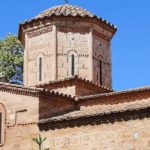
A well-preserved 11th century church from the Byzantine era at this convent hosts a miraculous icon of the Saviour.
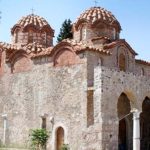
The Byzantine church of the Apostoles, 14th century, with wall-paintings (for many years covered by a coat of whitewash), has been described as one of the finest in Greece.
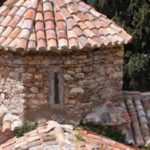
Don't miss the 11th-century church of Ayios Nikolaos in quiet Karitena with its vivid and generally well-preserved frescoes, even despite the Ottomans trying to erase the faces on these frescoes. If it's locked ask the locals to find the caretaker.
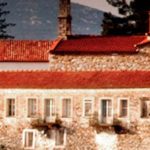
On the boundary of Lakonia in an idyllic setting among fir and cypress trees, this monastery from 1720 lies above Kaltezes at 680 meters. It was re-established inconspicuously during Ottoman years after the forest had almost reclaimed it.