Ecotourism Greece | Velani Country Hotel - Ecotourism Greece
Menu   ≡ ╳
  • Home
  • Destination
    • Athens & Nearby Islands
      • Poros Island
      • Agistri
      • Salamina
      • Spetses
      • Hydra Island
      • Aegina Island
      • Methana
      • Athens City
    • Central Greece
      • Evrytania
      • Viotia
      • Aitolo-Akarnania
      • Fthiotida
      • Fokida
    • Crete
      • Central Evia
      • Lasithi (Sitia)
      • Heraklion
      • Rethymnon
      • Chania
    • Cyclades
      • Anafi
      • Andros
      • Amorgos
      • Donousa
      • Dilos
      • Folegandros
      • Ios
      • Irakleia
      • Kea (Tzia)
      • Kimolos
      • Koufonisi
      • Kythnos
      • Milos
      • Mykonos
      • Paros & Antiparos
      • Naxos
      • Santorini
      • Schinoussa
      • Serifos
      • Sifnos
      • Sikinos
      • Syros
      • Tinos
    • Dodecanese
      • Patmos
      • Rhodes (Rodos)
      • Kasos
      • Kos
      • Nisyros
      • Tilos
      • Symi
      • Kastellorizo
      • Chalki
      • Kalymnos
      • Astypalea
      • Karpathos
      • Lipsi
      • Leros
    • Epirus
      • Arta
      • Ioannina
      • Preveza & Parga
      • Thesprotia
    • Evia
      • Northern Evia
      • Central Evia
      • Southern Evia
      • Skyros
    • Ionian Islands
      • Ithaki
      • Lefkada
      • Corfu (Kerkyra)
      • Antikythera
      • Kefalonia
      • Zakynthos (Zante)
      • Kythera
    • Macedonia & Thrace
      • Grevena
      • Florina
      • Kilkis
      • Pella
      • Rodopi
      • Xanthi
      • Samothraki
      • Drama
      • Halkidiki
      • Kastoria
      • Kavala
      • Kozani
      • Imathia
      • Pieria & Mount Olympus
      • Serres
      • Thassos
      • Thessaloniki (Salonica)
      • Evros
    • North Aegean
      • Chios
      • Ikaria
      • Lemnos
      • Lesvos
      • Samos
    • Peloponnese
      • Arkadia
      • Argolida
      • Achaia
      • Elafonisos
      • Ilia
      • Korinthia
      • Laconia
      • Messinia
    • Thessaly & Sporades
      • Alonnisos
      • Karditsa (Lake Plastira)
      • Karditsa (Lake Plastira)
      • Larissa
      • Magnesia (Pelion)
      • Skiathos
      • Skopelos
      • Trikala (Meteora, Pertouli)
  • Green Hotels
  • Activities
    • Art, History, Culture
    • Gastronomy tours
    • Archeology
    • Diving
  • Blog
    • Favorite Spots
    • History
    • Beach
    • Eco news
    • Travel tips
  • Για Επιχειρήσεις
  • Home
  • Accommodations
  • Velani Country Hotel
x Thank you for submitting an inquiry. We will get back to you as soon as we can.
x

Use the form below to contact us directly.

Please complete all required fields.

Cancel

Booking details

Accommodation name:

Room type:

Date from:

Date to:

People:

Adults:

Children:

Rooms:

Total:

Submit booking

Submit booking Go Back
x

Confirmation

Thank you! We will get back you with regards your booking within 24 hours.

Booking info

Accommodation name:

Room type:

Date from:

Date to:

People:

Adults:

Children:

Rooms:

Total price:

We wish you a pleasant trip
your Ecotourism Greece team

Back to website
  • local_libraryDescription
  • directions_bikeThings to do

Velani Country Hotel

In hidden valleys Crete just beside a protected forest lies an enchanting eco-friendly property called Country Hotel Velani, named after the acorn of the Kermes oak tree. Lying serenely next to the village of Avdou, this property and its surrounding nature will impress you.

As you arrive to this little country hotel of 12 large rooms, you'll likely be greeted by the friendly Greek-Dutch couple, Manolis and Sabine, who run this gorgeous place. It comes complete with the Odysseia horseback riding stables and a deliciously traditional Cretan restaurant, as well as spectacular views of nature from the terrace. A garden full of herbs, vegetable patches, fruit trees and flowers will delight visitors young and old, while the pool and equestrian center offer unparalleled recreation under the Mediterranean sun.

Nature-filled holidays and horseback adventures

Nestled on a hillside that overlooks the Langada Valley and the Dikti Mountains, this little 'Shangri-La' of a place is a kind of secret spot near the protected Kermes oak forest. The estate is spread over 4 hectares, representing a veritable botanical garden with many protected trees and flowers, including a number of orchids.

You'll also be amazed at the fruit trees, aromatic herbs (thyme, basil, oregano) and wild mushrooms, as well as the small animals onsite such as weasels, hedgehogs, badgers, hares, partridges and bats. Parts of the land also boast large Kermes oak trees (Prinos in Greek) that have grown to over 8 meters in size, representing majestic evergreen trees that are home to many small birds and animals.

One great way of discovering the nature is on horseback: Odysseia organizes quality horse riding holidays for all levels, as well as guided or self-guided trekking over a week through the Dikti mountains to the Libyan Sea. There are also 'homebased' day rides or 2-hour treks for experienced riders. If you haven't learned to mount a horse yet, try the beginners course. The 2-hour program for families during the hot summer season is also recommended.

A treasure chest of activities at your doorstep

Just walking around the gardens and discovering the scented herbs and plants such as jasmine is a pleasure in itself, so is lazing by the wall and admiring the different bird species as they fly overhead. If you really like birds, we suggest a professional birdwatching tour in the company of an experienced guide. Birds that visit the hotel include the hoopoe, wagtails, wood pigeons, crows, swallows and many more. You're likely to see the Griffon vulture among other birds of prey flying high around the area as well. Lastly, the scent from the jasmine in the evening will captivate you.
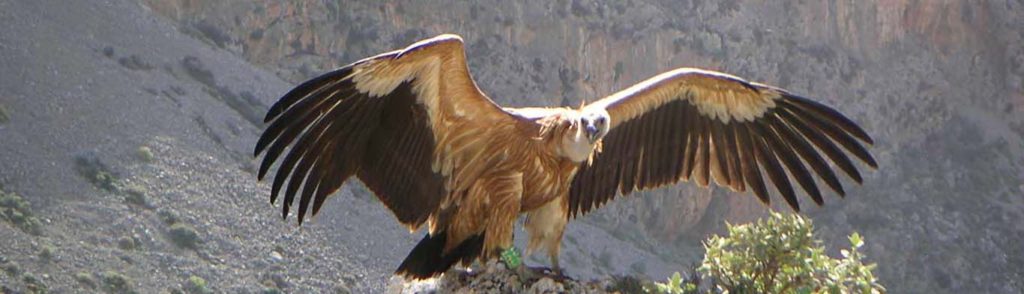
Of course the best way to admire this wonderful region's very rich biodiversity is by biking or hiking. Numerous mountain paths offer a great opportunity for a morning hike, so does the official E4 path that will take you from the property itself all the way to the Lassithi plateau. You'll come across historic churches, gorgeous villages, refreshing rivers, majestic gorges and sublime sea views that will dazzle every adventurer.

Paragliding is also a common sport in this part of Crete, ideal for experienced paragliders who have their own equipment. The valley below the hotel is an ideal spot for takeoff and landing, free to use by anybody.

Closer to home, owner Manolis who's also as a talented chef, can organize some mouthwatering cooking lessons and show you the best of Cretan cuisine. Before or after lunch you can walk up the hill to the small cave with the church of Agia Fotini some 20 meters deep inside. Lastly, a leisurely walk to the traditional village of Avdou is also recommended.

Unparalleled old-world gourmet treats

Remember the days when grandpa picked fresh fruit off the trees and grandma prepared a hot meal from free-range animals on the farm? These habits never went away on Crete. Headed by the talented Chef Manolis who organizes onsite cooking lessons, the Velani restaurant uses organically-grown produce from its own garden, as well as the best cheeses and meats you've tasted in a long time and that hail from the sheep and goat grazing in nearby fields. There are many vegetarian options as well, as Crete takes pride in its low-meat healthy Mediterranean diet.

A dose of Cretan extra virgin olive oil graces the dishes, which are best washed down with a couple of glasses of local wine made from ancient grape species that date from the Minoan era! An olive grove on the north side gives the estate enough olive oil to transform the restaurant's dishes into magnificent Mediterranean meals, enhanced by this golden elixir.

On the sweeter side, worth mentioning is the thick honey that comes straight from the local beekeeper. Carob trees are also abundant, with the latter producing rich carob molasses to sweeten cakes and other baked goodies. Sweet or savory, all the sun-kissed ingredients here will impress you with their bursting flavors, rich scents and authenticity.

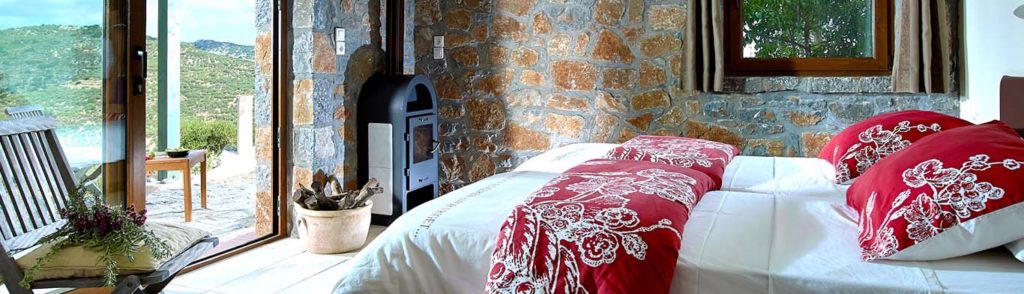
As a final note it's important to mention that in all this nature and gastronomy, the hotel's rooms offer all modern comforts such as free Wi-Fi internet, air conditioning and small fridges. You won't be spending much time indoors though, just because there's so much to do in the open air! Welcome to one of the best eco adventures in Crete.
Heraklion

The region of Heraklion (Iraklio in Greek) lies between those of Rethymnon, to its west, and Lassithi, to its east. A wildly diverse area, where some of the most spectacular archaeological sites in the world can be found against a backdrop of sparkling seas, and the rugged mountain landscape, of the eastern side of the Psiloritis range (or Mount Ida). Resorts of all types are spread across the northern coastline, and there’s something for all tastes, here. Read more below...

Chersonissos (or Hersonissos) and Malia to the east of Herakleion city (along with Aghios Nikolaos in the province of Lassithi), are probably the best known tourist resorts on the island, though there are plenty of quieter spots too. Getting out and about in this region can be quite thrilling. There’s so much to see and do, that one would need months, if not years, to discover all that Herakleion has to offer.

Of palaces and castles

Of the six Minoan "palaces", so far unearthed on Crete, four are in this nomos: Knossos, Phaistos, Malia and Galatas. The latter of these has only recently been elevated to that status, and is practically unknown outside the archaeoligists’ world. The other three, however, are world famous, and are in settings of such disparate geography, that visiting all of them should be a must, for anybody interested in the wonderful world of these Bronze age Cretans. It doesn’t stop there, either. If anything the sites at Aghia Triadha and Gortyna are even more impressive than the "palaces"; add to these the three excavated sites in and around Archanes, that of Arkalochori in the foothills, and Phaistos’ port, Kommos, on the south coast and we’re still only scratching the surface.

Castles abound; villages nestle in the foothills which continue to climb, before reaching a crescendo just over the border of Rethymnon, where Psiloritis (Mount Ida) rises to 2,456 metres. On the Herakleion side of the border is the Kamares cave, where the eponymous Kamares-ware vases were found, with their beautiful design and egg-shell thin pottery. The city of Herakleion itself can hardly be described as beautiful, but there’s more than enough to see, to make it well-worth visiting. It has a vibrancy associated with a small modern city, which has been through many transitions throughout its turbulent past.

Arabs, Venetians, Ottomans and Germans

The city’s name is a modern rendering of the Roman port of ‘Heracleum’, and was called ’rabḍh el-Khandak’ ("fortress of the moat"), by the Saracens (who were here from 824 AD until their expulsion from the island by Nikiphoros Phokas - later, Byzantine Emperor - in 961. Phokas’ castle at Prophitis Ilias is well worth a visit (see castles). The Venetians, who acquired the the island from the Boniface de Monferat in 1204, were later to currupt the by-now-Hellenized version of the Saracen name "Chandax", to Candia, which also became the generic title for the whole island. Under Ottoman rule (1669-1898), the city was known Kandiye - though the Greeks tended to call it ‘Megalokastro’ (Big Castle) - before being renamed once more as ‘Herakleion’ during the island’s autonomous period (1898-1913).

Looking at what remains of the Venetian fortifications (known then as ‘Rocca al Mare’, and now by its Turkish name, ‘Koules’), one should spare a thought for those who were caught within and without its walls, during the latter days of Venetian ownership. For here it was that the longest siege in European history took place. For over 21 years, between May, 1648, until a treaty was signed on September the 16th, 1669, the Greeks and Venetians living within, resisted Ottoman attempts to enter from without. The treaty allowed those within the city’s walls to escape the island, and Crete - with the exception of the three fortified islands of Spinalonga, Gramvoussa Isle and Souda Isle, which remained under Venetian ownership until 1715 - was in Ottoman hands, in which it would remain for the following 229 years. One could happily spend a fortnight in the city; the Venetian walls are still standing in parts, as are some of the arsenali, though like Rethymnon and Chania, Nazi bombing raids prior to the commencement of The Battle of Crete (20th May 1941), destroyed much, and in their inimitable and unspeakably brutal manner, the Nazis punished the people of Herakleion for their resistance during that battle by blitzing the city again, after they’d conquered the island. Ignore the modern architecture the best you can, and look out instead for some spectacular examples of Venetian, and to a lesser degree, Ottoman architecture.

The hidden vs. the not-so-hidden side

Mountain villages such as Zaros, Venerato, the twin village of Asites (Kato and Ano) and Kamares are wonderful places to escape the heat of high Summer. Archanes, southeast of the famous Mount Juktas (where Zeus is supposedly buried, much to the annoyance of the Greek poet Callimachus, who called all Cretans "liars" as a result of this assertion), is a lovely small town, and is a great place to stay. The north coast resort of Malia, the setting for the recent "boys-behaving-badly" film of the British TV series, ‘The Inbetweeners’, has a reputation for young people drinking far too much, but the old village, across the main road from the resort, is a delight. Chersonissos too, has more bars than one could reasonably be expected to visit during a fortnight’s holiday, but the atmosphere here is far more toned-down, and the holiday-makers generally a little more mature, in every sense. The Minoan "palace", of Malia, is a further three KMs to the east of the resort, and is an essential place to visit, whilst Chersonissos was a port of some import, through the Classical Greek to Byzantine eras, and there is a wonderful pyramid-shaped fountain, dating back to the Roman period, replete with fishing-themed mosaics on the seaside road, as well as an early basilica, with mosaic floors, perched on a hill behind the port.

To Herakleion’s west lies the tourist resort of Aghia Pelaghia, a modern development, set within a cove, which itself nestles within another cove. It’s a lovely place to have a beach-holiday, and is close enough to Herakleion (22 Kms from its centre), to allow one to enjoy the best of both worlds, and mix water-sports with culture. The south coast is relatively barren, compared to that of the north. The environs of Kommos have accommodation, and would suit those wanting to get away from it all on the spot where the port of Phaistos and Gortyna were situated in Minoan, Dorian and Archaic times (see archaeology). The busier southern tourist resorts, are just over the Rethymnon border, so places such as Aghia Galini and Plakias can easily be visited if you find yourself on Herakleion’s south coast.

Written by Stelios Jackson exclusively for Ecotourism-Greece.com


Read more

Book now
  • Velani Country Hotel

    From $

    In hidden valleys Crete just beside a protected forest lies an enchanting eco-friendly property called Country Hotel Velani, named after the acorn of the Kermes oak tree.

  • Follow us


  • Top destinations
    • Skyros

      View all
    • Thirasia

      View all
    • Fthiotida

      View all
    • Chania

      View all
    • Chios

      View all
    • Magnesia (Pelion)

      View all
  • Travel inspiration
    • An eco-paradise in a forgotten part of Crete

    • Bramiana, Crete

    • Enchanting Zagori

    • Rhodes – a must for travellers

    • Meteora: One of Greece’s unparallelled treasures

    • Whispers of Stone and Sky: The Trails of Amorgos

Contact us: nature (at) ecotourism-greece.com

  • Home
  • Configure
x

Log in

Forgot your password?

x

Register