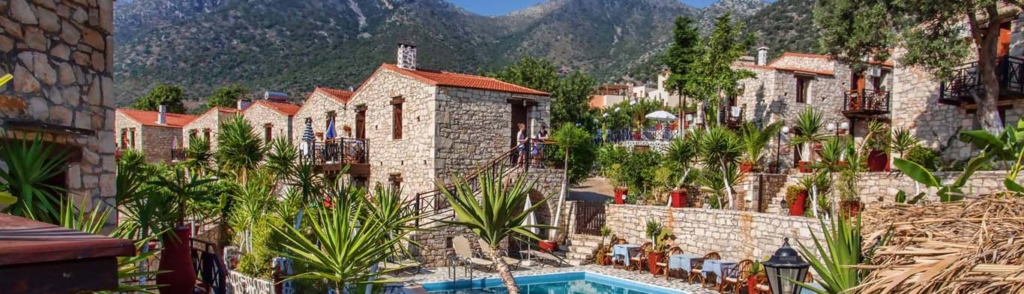
We totally fell in love with the Stone Village – a collection of 37 studios and apartments – because it was built in traditional Cretan style (yet with all modern comforts) and boasts an organic garden, along with a small animal farm and three pools. The property’s restaurant, which serves local dishes and lots of good Cretan wine, is a great bonus for this lovely “traditional village” hotel.
In true Cretan home style, the apartments and studios are made using the island’s natural stone and wood – a much more eco-friendly way to build. Stone, wood and whitewashed walls, along with sofa beds in the living areas and fireplaces for the mild winter season create a cozy yet Zen atmosphere. Families will particularly enjoy the one-bedroom apartments and two-floor maisonettes, while couples can revel in the studios. The property is full of flowering plants and even local banana trees, surrounded by green hills yet not far from the sea!
Cretan flavors for breakfast and dinner
Get ready for a true Cretan feast. You’ll be happy to know that both breakfast and dinner (half-board arrangement included in the price) are made with local certified products. The breakfast also has the national Greek Breakfast certification, which ensures you’re going to start your day with a panoply of delicious local flavors. Not only are most fruits and vegetables grown in Crete, but they also come right from the owner’s farm! The same goes for the meats which are free range, keeping in mind that Cretan cuisine also has plenty of vegetarian and vegan options.
A world of eco-activities
If you’ve always wondered what it’s like to ride a horse, the Stone Village has a modest horse-riding arena where you can get familiar with these wonderful animals. There are also ponies for kids! Beyond the “village” boundaries, you can explore all the good that this region has to offer, from exploring the nearby Melidoni Cave and wondrous 17th-century Attali Monastery to visiting the El Greco Museum in the village that the famous painter came from. Nature activities in the area include eco-beach fun such as standup paddling, diving and sailing, while land-based activities include hiking on nearby Mount Psiloritis. Just ask your hosts to help you plan a day trip or an eco-trip. Lastly, visit the pottery shop in Maragrites village up in the mountains if you like to see some good local art.
Budding green philosophy
In many ways, the Stone Village is eco-friendly by default, as it was built using real stone (rather than cement) and focuses on natural building materials, along with green surroundings. The owner has taken steps to implement recycling initiatives, clean with natural products such as vinegar, introduce a towel reuse program and provide green guidelines for employees. While there’s room for more green steps to be taken, and the management has promised to do so, we believe this is a great start for this traditional property, with the authentic family hospitality playing a key role in preserving local culture and tradition.
Rethymnon
The province (nomos) of Rethymnon, is sandwiched between those of Herakleion to its east and Chania to its west. Lacking its own airport yet easily accessible from Chania or Heraklion, this region is one for the more adventurous traveller. The rolling hills of the Amari valley are ideal for cycling, walking, or just relaxing in a landscape of sumptuous beauty. Gorges cut their way through limestone, before reaching the sea, depositing rainwater in winter and hikers in summer. Mountain villages are fabulous places to escape the heat and see traditional craftwork. And then there’s the towering presence of Psiloritis (Mount Ida), the island’s tallest mountain, which at 2,456 metres above sea level, rises a full three metres higher than that of its nearest rival, Mount Pachnes, in the White Mountain (Lefka Ori) range of Chania. Read more below...
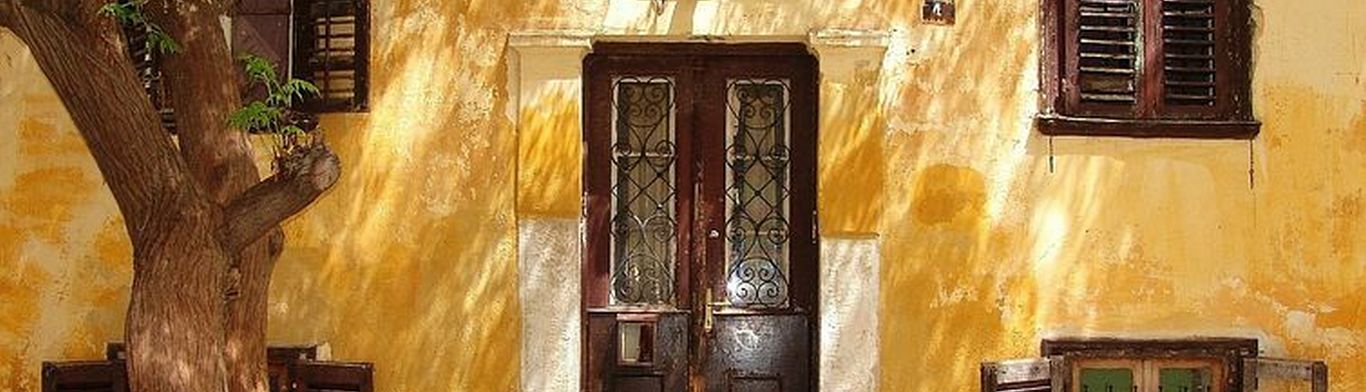
Rethymnon itself vies with Chania for the accolade of 'most attractive city' on the island with its Venetian architecture and winding streets, juxtaposed with Ottoman minarets and a rather pleasant modern town. It has its own sandy beach a short stroll east of the main town with a number of bars, restaurants and coffee shops, lining the road opposite. Tavernas cluster around the old-harbour, perfect for romantic evenings and a seat with a view, but the best food can usually be found a street or two back. Worth visiting in the area are the Rimondi fountain and the Venetian Fortezza (more about these two in the Landmarks section).
Pixabay, travelspot
The city’s archaeological museum, situated at the fortezza’s eastern flank, is a favourite on the island, and the Historical Folklore Museum is also well worth a visit. A park in the new city can be a very relaxing way to spend some time, and sip at a coffee. The park doubles up as an open-plan zoo but is not worth visiting for that reason alone. If you find yourself in Rethymnon city, at the end of July, there’s a wine festival. There’s also a fabulous carnival, leading into the forty days of lent but check when it commences as Easter is a highly movable feast, and as a consequence, so too is the carnival.
Crete has such a wealth of important archaeological sites that, on the face of it, the province of Rethymnon might appear not to be over-endowed in this department, but there are enough, covering every period from final Neolithic (circa 3600 BC) to Ottoman to keep the would-be historian happy. (Read about the sites of Plakias, Monastiraki, Eleutherna and Lappa).
Pixabay, paulwell
Lappa (modern Argyroupolis) is another site well worth visiting for the ancient site itself (at the height of its powers during the Hellenistic period - late fourth century BC onwards) and the modern twin-layered village, with its cascading waterfalls and mills (Argyroupolis supplies the water for Rethymnon city), superb tavernas, and fabulous folklore museum, next to the Zographakis hotel, and curated by Mr. Zographakis himself, who holds the key.
Axos is another Minoan site, situated on the road between Anoghia and Bali, the latter of which acted as its port. Since one doesn’t need a passport to cross from one region (nomos) to another, note that Aghia Galini is far closer to the exceptional Minoan sites of Phaistos and Aghia Triadha than Herakleion, and Lake Kournas is appreciably closer to the city of Rethymnon than that of Chania, despite being geographically part of the province of the latter.
Rethymnon’s north and south coasts have fine beaches, and in between these lies Mount Ida. On its eastern flank at close to 1500 meters lies the Nida plateau, and just above this the cave of Ideon Andron (meaning 'eating place for men'), where Zeus was mythologically reared. Mountain villages such as Spili, with its beautiful Venetian fountain, spouting water from the heads of 19 lions is a fabulous place to escape the summer heat of the coastal plains.
Fourfouras on Mount Kedros’ western flank, has accommodation at the charmingly run ‘Windy Place’, and is a lovely village, as are those of the Amari valley, especially Amari itself - with its church of Aghia Anna containing frescoes dating back to the early 13th century, said to be the oldest on Crete (though the ones at Chromonastiri, may be even older) - and Thronos, which is a lovely village; both Amari and Thronos have accommodation. There are beautiful, traditional villages at Vizari, Lampiotes, and Monastaraki which as well as being the setting for the Minoan structure mentioned earlier also boasts a couple of very early churches: Archangeolos Michaelis and Aghios Georgios, complete with frescoed interiors. These villages are on the Pan-European footpath, known as the E4. While this should be one continuous walk from Kisammos in the north-west of the island to Zakros on the east coast (or vice versa), it does have a tendency to spider, and never more so than in the province of Rethymnon where at one point there are three different paths, running north, south and central.
East of Rethymnon, Zoniana has a wonderful museum showing the history of Crete. Famous wax models of Dominikos Theotokopoulos (El Greco) and Eleftherios Venizelos (the greatest of all Greek statesmen) feature, amongst others. Anoghia is capable of accommodating the more adventurous traveller, and is known for its crafts, such as weaving, tapestry and lace work. It’s a very pretty village, despite suffering badly at the hands of the Nazis due to its part in the capture of General Kreipe, in 1944. If you visit the museum of Alkibiades Skoulas, look out for a painting depicting these atrocities. Two other places are inexorably linked with Crete’s past under harsh Ottoman rule: The Arkadi monastery and the Melidoni cave, which are both worth a visit (read more about them in the Landmarks section).
On a more refreshing note, Rethymnon’s north coast is ideal for those who like a good swim, with beaches in abundance. Most of these lie east of the city, though Petres is an exception. For more on the beaches click on the section titled Swimming, under Chania.
Rethymnon is a nomos for the cognoscenti. It is for those wishing to escape the pressures of everyday life and spend some time off the beaten track. If this is your kind of thing, then Rethymnon is for you.