
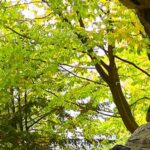
This wonderful cave is located beside a quaint mountain village. As you hike through the region, look for the watermill of St. Minas and this beautiful cave.
If you’re an adventurous spelunker, this cave is perfect for you. It’s unexplored and a bit of a mystery, so as long as you take all possible precautions, it could provide a wonderful opportunity for experienced spelunkers.
Experienced spelunkers will find this stunning cave at an altitude of 1340 m along the mountain ridge. It’s unexplored but its beauty is still well-known – ask the locals for tips and advice before venturing in to admire the cave chamber dripping with stalactites and stalagmites.
If you love hiking and spelunking, these twin caves near Messohora Village are perfect for you. Located at an altitude of 800 meters, you’ll enjoy searching for them and then exploring their beautiful chambers.
If you’re an experienced spelunker and you’re feeling adventurous, this is the cave for you. Close to a mountain village, this cave is rarely explored and is undeveloped. Ask the locals for directions and tips, and as always keep safety in mind as unexplored caves can be dangerous.
When you visit this beautiful mountain village, ask the locals for directions to Kokkini Spilia. Translated as Red Cave, Kokkini Spilia’s name is suggestive of the cave chamber’s main feature, which is the beautiful red color of the rock.
When you’re done exploring, stop by the nearby gushing springs of Frahos and Vrisoula at an altitude of 1200 meters and then continue your hike in the area.
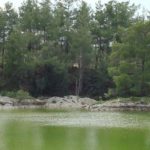
Valley and mouth of the Gadouras river (about 10 km north of Lindos, about 8 km south of Arhangelos); east of the main road Arhangelos-Lindos. Combination of river valley with a stony/sandy bed, some fresh water pools, scrub, a kind of lagoon with high reed and various shrubs, and in the neighborhood: arable land, olive groves and grassy fields. This place is good for waders in spring and autumn (Little stint, Little ringed plover, Ringed plover, Wood sandpiper, Green sandpiper, Marsh sandpiper, Collared Pratincole); Egrets (Glossy Ibis, Little Egret, Grey Egret, Squacco Heron); Terns (White-winged black tern, Gull-billed tern). Reed Warbler, Great Reed Warbler, Olivaceaous warbler, Bee-eater, Quail, Woodchat-shrike and Short-toed Lark should be certainties in the breeding season. This is also one of the best places for Stone Curlew and Rufous Bushchats.
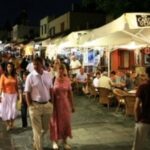
The beach on the north side of the town, near the Aquarium, can be good for migrating birds, egrets and seabirds, like Little Bittern, Squacco Heron, Red-throated pipit, White-winged Black Tern, Whiskered Tern, Common Tern, Balearic Shearwater, Cory`s Shearwater. During migration Monte Smith is very interesting for songbirds (Blackcap, Wood Warbler, Icterine warbler, Subalpine warbler, Flycatchers); Wheatears and Shrikes. Monte Smith holds also a strong population of Olivaceaous warblers. The old town of Rhodes has a population of Crag Martin. On or between the old walls of Rhodes-town, Little Kestrel and Hoopoe can be seen regularly. The harbour of Rhodes-town can be interesting for terns and gulls, especially Audouins Gull, Mediterranean Gull, Common gull, Common Tern and even Gull-billed Tern.
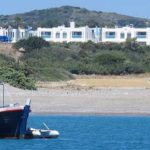
From its sand dunes the flowing have been seen: Short-toed Lark, Crested Lark, Tawny Pipit, Hoopoe, Woodchat Shrike, Lesser Grey Shrike and Black-headed Bunting. The chain of little fields, sometimes irrigated, provide good habitats for larks and pipits during migration and winter (Calandra Lark, Sky Lark). In autumn a sea-watch can be satisfactory with species like Shag, Eleonora`s Falcon, Buzzard, Long-legged Buzzard, Honey-buzzard and Cory`s Shearwater.
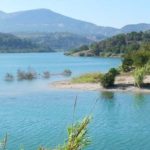
The only deep and permanent freshwater can be found at the Appolakia Reservoir built in the late eighties. Take the road from Appolakia to Gennadi. At the north end of the reservoir an area of marsh and reed beds attracts species like Grey Heron, Little Egret, Glossy Ibis, Purple Heron, Black-winged Stilt, Snipe, Wood Sandpiper, Marsh Sandpiper, Temminck`s Stint. It is the most certain place to see species like Little Grebe, Coot and Moorhen, sometimes accompanied by Garganey, Mallard, Black Necked Grebe or Kingfisher.