
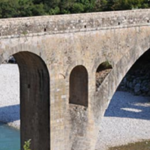
This bridge crosses the Acheloos river and features five arches. It was built in the early 20th century.
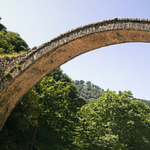
Karia, 15 kilometres southwest of Argithea, is known for its 13th century bridge called Kamara. It is 3 km away from modern bridge of Agorassia and 800 metres from the highway at Vaitsa. It is 15.5 metres high with an open arch of 30 metres. It is built from limestone rocks on a foundation and in good condition.
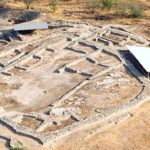
Just 5 km west of Volos and close to the village of Dimini lies a grand Neolithic settlement with a high level of urban sophistication dating from the 5th century BC.
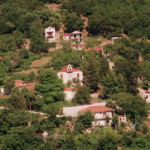
The village of Kali Komi within the Argithea region features an old watermill(photo) that has been preserved, and was still in use until 1996. The village is also characterised by its stone-built houses more than a hundred years old.
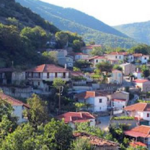
Thrapsimi in the municipality of Menelaides is 31 km from both Karditsa and Sofades at an altitude of 650 metres. It features the preserved house of the priest Elias Katsis, built in 1925, a three-story stone mansion built by masons from Epiros. There is also a folk museum in the village.

In Moschato, within the Plastiras municipality, one of the landmarks of interest is the stone-enhanced spring of Agios Prokopios, said to date from the end of the Byzantine era but rebuilt in 1905.
Neolithic settlements and a broad variety of finds from the prehistoric and historic years were discovered in the area surrounding the village. Remnants from a mosque were found at the Tzami height, where a Myceanean tomb with significant finds was also unearthed.
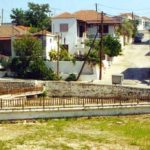
Mythology has it that the Goddess Hera bathed in the crystal, healing waters of this former spring in order to renew her virginity. The spring, located in the center of the ancient city, flowed abundantly since ancient times – ever since it was inhabited in 3000 B.C. – until 1998, when it suddenly dried out.
Ano and Kato Ktimeni are jointly administered villages within the municipality of Tamassi. Its landmarks include the stone-built single arch bridge on the Draniotiko River, north-west of Kato Ktimeni and the double-arched bridge of Loutra.
One of Thessaly’s most notable sites, the Acropolis of ancient Feres was inhabited between the neolithic period (around 300 B.C.) and the era of the early Roman Empire (first century A.D.), and again in the Byzantine period during the 13th Century. It was given its name in modern history for being the home of local author, politician and revolutionary Rigas Feraios, who was one of the heroes of the 1821 Greek Revolution. The site has undergone few renovations until the present day although its most vulnerable parts are being maintained.