
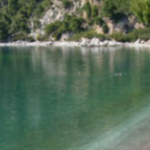
Along central Evia’s tranquil northern coast, Dafni beach is a clean and calm bathing destination for those looking to take a refreshing dip in privacy. Just outside the village with which it shares the same name, Dafni beach is full of pebbles and surrounded by trees all around. There are several springs which flow into the sea from the nearby mountain of Kandili.
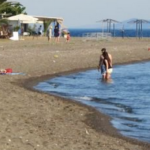
Within the last two centuries, prehistoric settlements dating before 3000 BC have been unearthed here, as well as numerous artefacts from a variety of regions and cultures, confirming that Amarynthos was an important trading centre during ancient times. Many of the archaeological discoveries have been found on the hill above the natural harbour as well as throughout the wider area.
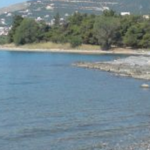
Along the 12 klm. stretch between Amarynthos and Aliveri lays the Akti or coast of Nireos, named after a sea divinity before the time of his better known counterpart Poseidon. Calmer than Eretria and Amarynthos, this bathing spot features natural shade provided by the tamarisk trees backing it and clean water with a beach of course sand.
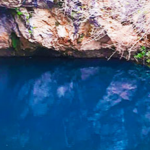
Thermal springs are located outside the seaside town of Kymi along Evia’s Aegean coastline. The first is run by the municipality and is cool for spring standards, with water temperatures hovering around 14 º Celsius. This spring is recommended for bathers suffering from kidney disorders. The second is used exclusively for bottling and is not open for bathing. Both are located at an altitude of 180 m.
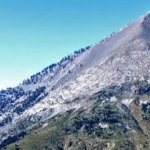
Evia’s tallest mountain is logically also the best spot for mountain climbing throughout the island. Reaching 1743 m., the climb to its summit is considered more of a challenging hike, and its unique position between the Euboean Gulf and Aegean Sea causes it to experience weather similar to that of much higher altitudes, causing inexperienced climbers to turn back due to conditions. Expect snow in winter and a cool climate in the warmer months.
Just left of the small harbour in the picturesque seaside town of Oreoi, the eponymous beach features calm, clear waters and fine sand. Tavernas and cafes are found just behind the beach.
Evia’s western most beach looks across to the small islets of Lihadonisia and offers swimmers a shallow sandy beach. Though popular in itself, most people come here to catch the boat which makes runs between the small islands throughout the day.
You could be forgiven for believing you were on the shore of a Swiss Lake rather than an Aegean island while relaxing on the peaceful and scenic beach of Rovies. Smooth pebbles and pine trees that practically overhang into the waters give this stretch of beach a unique feeling. The mountains behind and the mainland in the distance add to the feeling of being anywhere but on an island!
Aside from a small section of umbrellas and sun loungers, the beautiful beach of Pylio is unorganised and large enough to handle the crowds. Its shallow waters and sandy beach make it ideal for young children, though due to the fact that it faces the Aegean, it can be prone to strong northern winds.
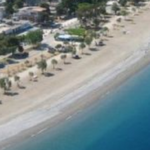
The popular beach of Pefki sits close to the northernmost point of Evia. It is a well-known resort, attracting families and very popular with campers. It takes its name from the Greek word for pine tree, and indeed the trees tumble down mere metres from the beach. Pefki is extremely popular during the summer and if you are looking for peace and quiet, it is best to visit during the off season.